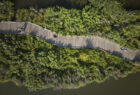
As cities across the United States confront aging infrastructure, Douglas Voigt makes the case for an approach focused on small, strategic interventions. In a new article for Green Building & Design Magazine, he explores how targeted improvements can strengthen communities, restore ecosystems, and improve everyday urban life.
While infrastructure challenges often call to mind large-scale projects that take decades to implement, Voigt argues that meaningful change can also happen through site-specific strategies. By rethinking infrastructure traditionally designed to serve a single purpose, architects and urban designers can address multiple needs at once, creating a cumulative impact across a city. Three SOM projects illustrate the potential of this approach.
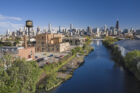
In Chicago, the Wild Mile is transforming a section of the Chicago River’s North Branch into a floating eco-park. Developed in collaboration with Urban Rivers and the city, the project combines habitat restoration with public access, recreation, and education. Floating gardens reintroduce the transition between land and water that native species depend on, while boardwalks and kayak docks invite people to experience the river. Designed to expand over time, the project offers a scalable model for restoring nature within a dense urban setting.
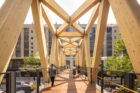
In New York, the High Line Connector demonstrates how a relatively small addition can improve connections across a busy neighborhood. Designed with Field Operations, the 600-foot-long elevated walkway creates a safer, more welcoming pedestrian route between Moynihan Train Hall and the High Line. Its two bridges pair a mass timber structure with a tree-lined passage, bringing shade and habitat above heavily trafficked streets while demonstrating new possibilities for sustainable bridge design.
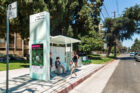
In Los Angeles, the Sidewalk and Transit Amenities Program brings this thinking to the daily experience of waiting for a bus. Designed by SOM in collaboration with Designworks and Studio One Eleven, a flexible kit of parts allows shelters and shade structures to adapt to different sites and community needs. The program combines protection from the sun with seating, lighting, and real-time transit information, prioritizing neighborhoods with the greatest need.
Across these examples, Voigt emphasizes that improving civic infrastructure is a collective effort. Collaboration among public agencies, nonprofits, private partners, and designers allows individual projects to deliver broader public benefits—and provides a roadmap for cities seeking to make lasting improvements through achievable steps.