Project
Barnard College The Milstein Center for Teaching and Learning
New York, New York, United States
The Campus Instructional Facility sets new benchmarks for carbon reduction at the University of Illinois, demonstrating high environmental performance, low-carbon material expression, and efficient structural design to inspire the next generation of engineers.
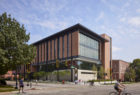
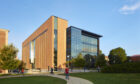
The Campus Instructional Facility (CIF) is a multi-story center for hands-on learning designed to meet the changing needs of engineering students and faculty at the University of Illinois Urbana-Champaign. Located at the northwest corner of the Bardeen Quadrangle along Springfield Avenue and Wright Street, this teaching hub enables collaboration and incorporates new technologies for hands-on learning. The University partnered with developer Vermilion Campbell in a public-private partnership, introducing a successful new financial model for University of Illinois projects.
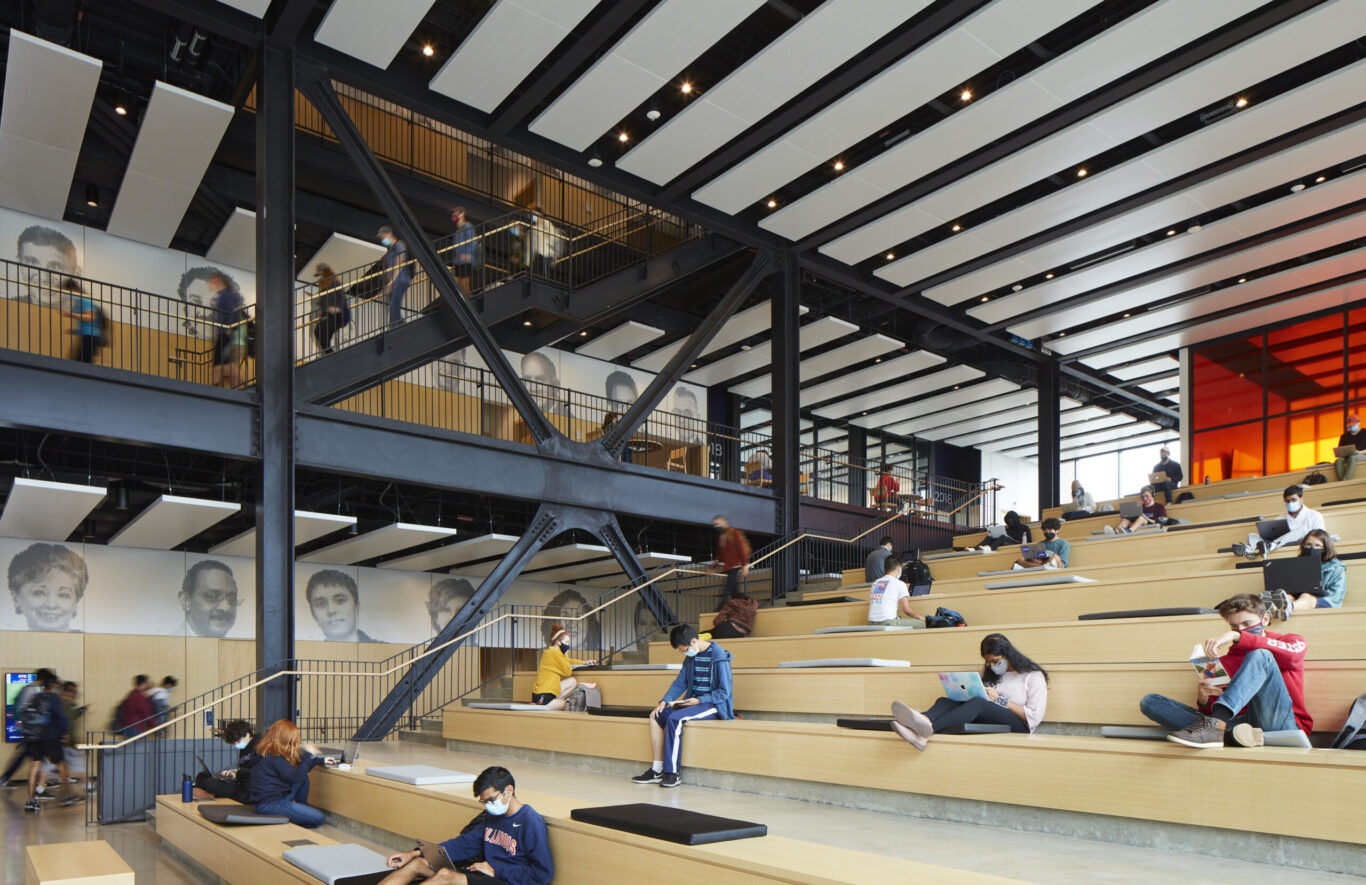
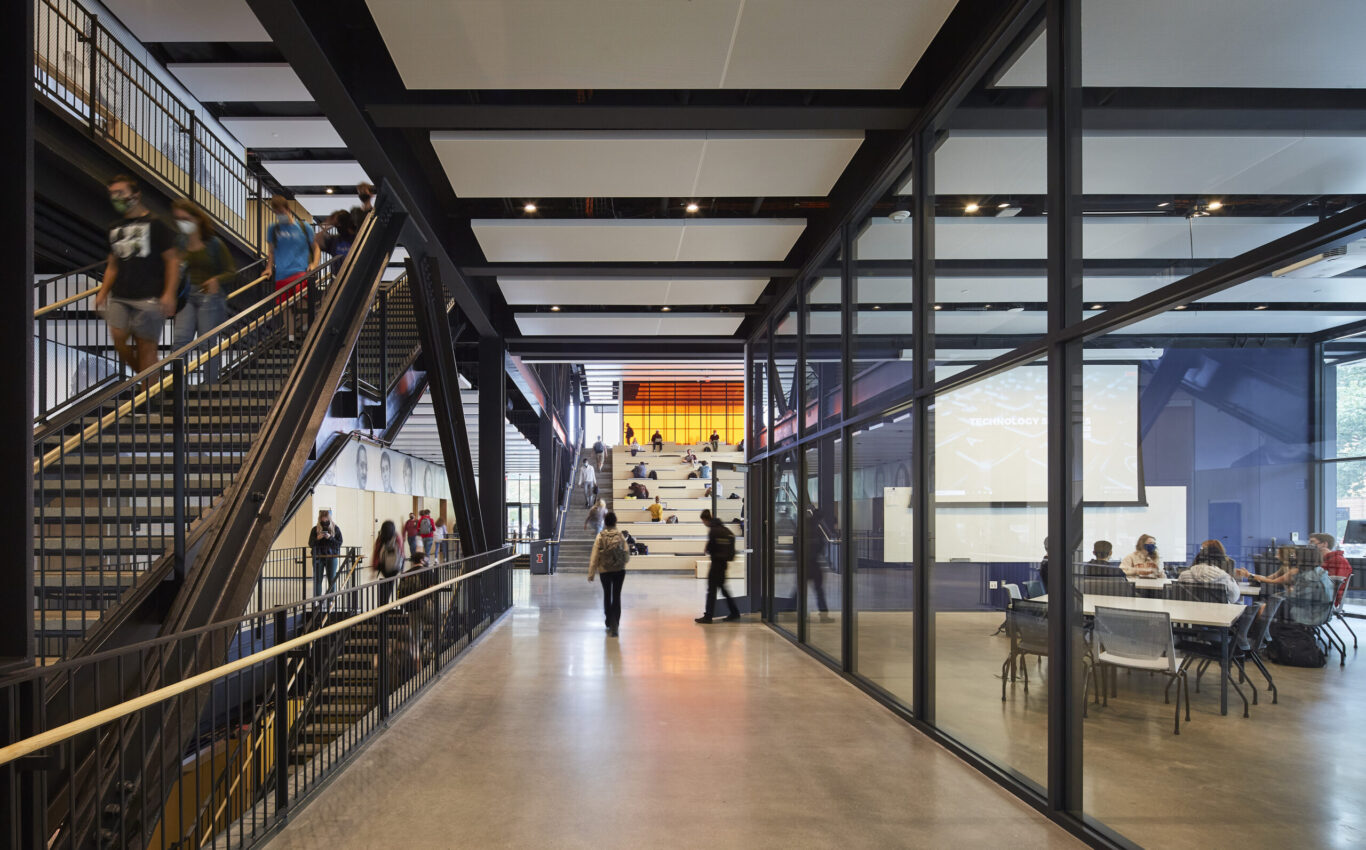
The building celebrates the university’s mission to cultivate research and discovery and includes flexible classrooms and reconfigurable spaces designed to evolve as needs change. Structure and architecture are carefully integrated, with exposed structural steel elements supporting the building’s architectural massing throughout, seamlessly integrating radiant cooling and heating. Research for structural optimization, fireproofing and MEP were done in collaboration with the University’s engineering students and faculty, and the building itself is now part of the engineering school curriculum.
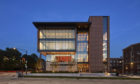

The design of the Campus Instructional Facility blends the rich history of the University of Illinois with its progressive, technology-focused approach to learning. In designing the building, we sought to celebrate the intersection of architecture and engineering, while creating an environment where experimentation and invention could thrive.
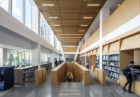
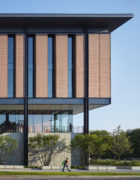
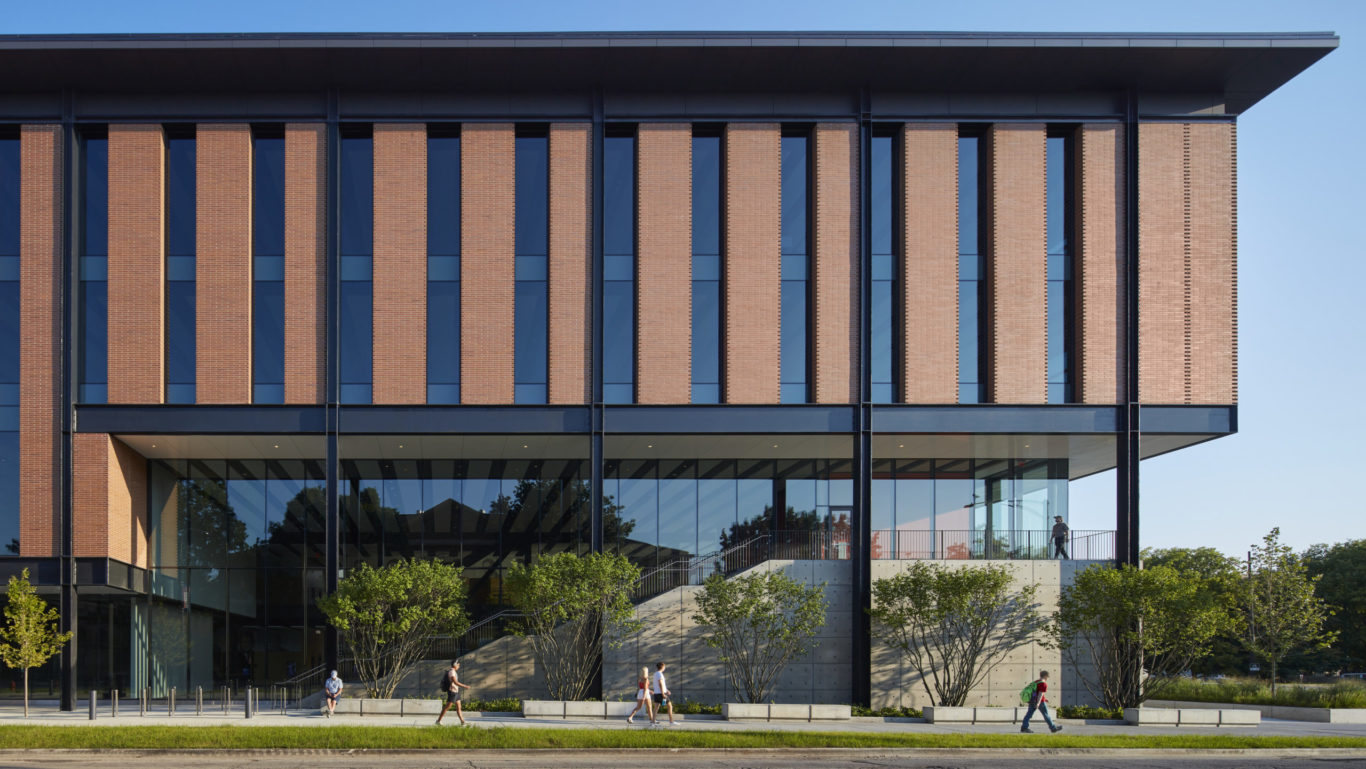
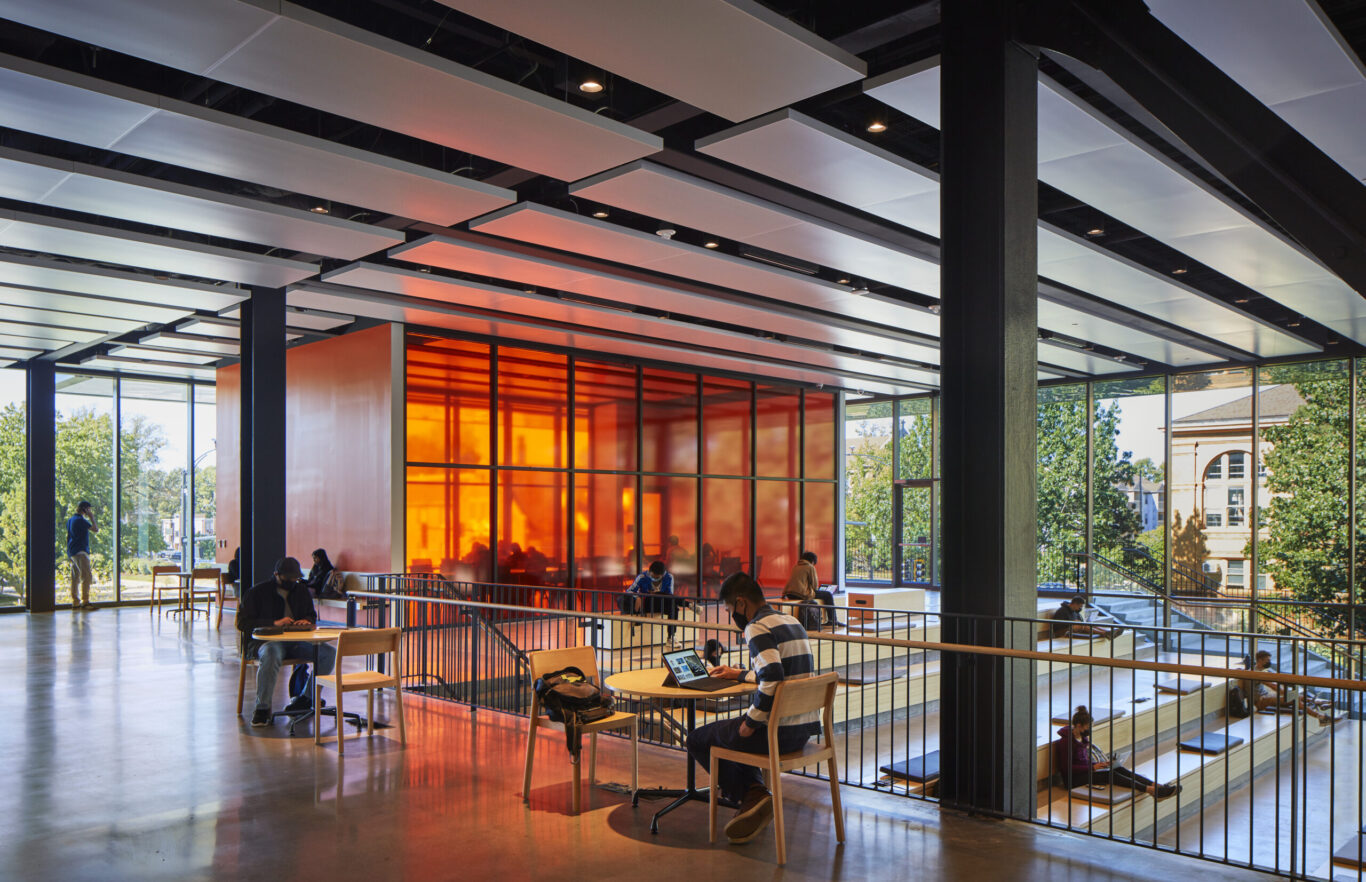
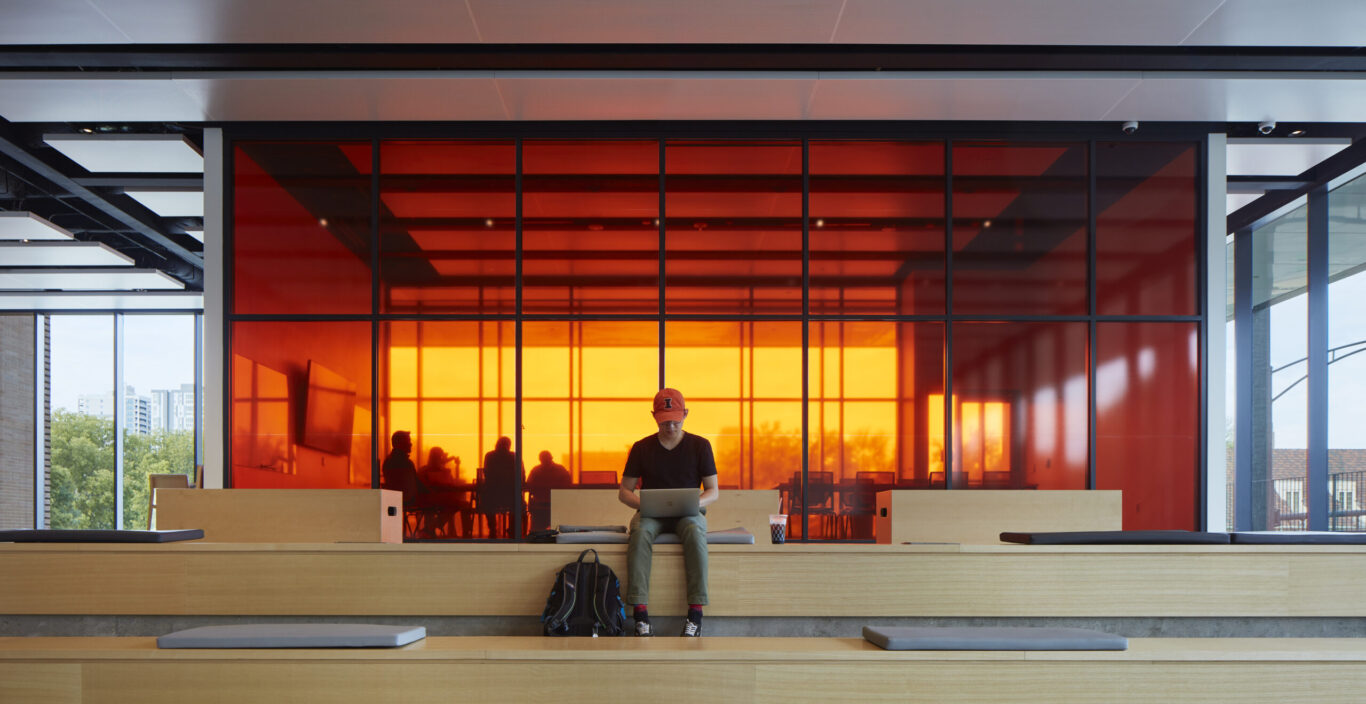
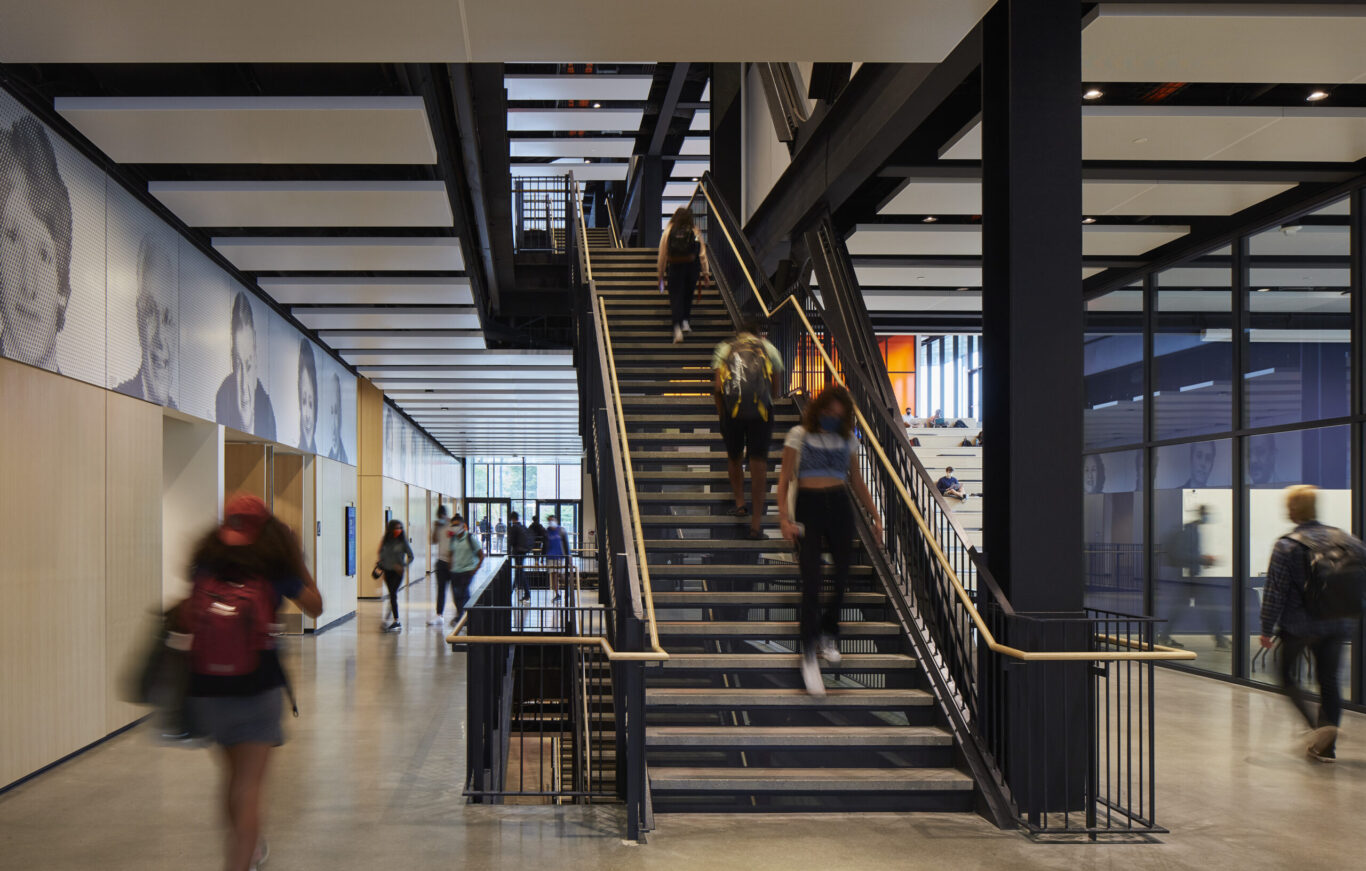
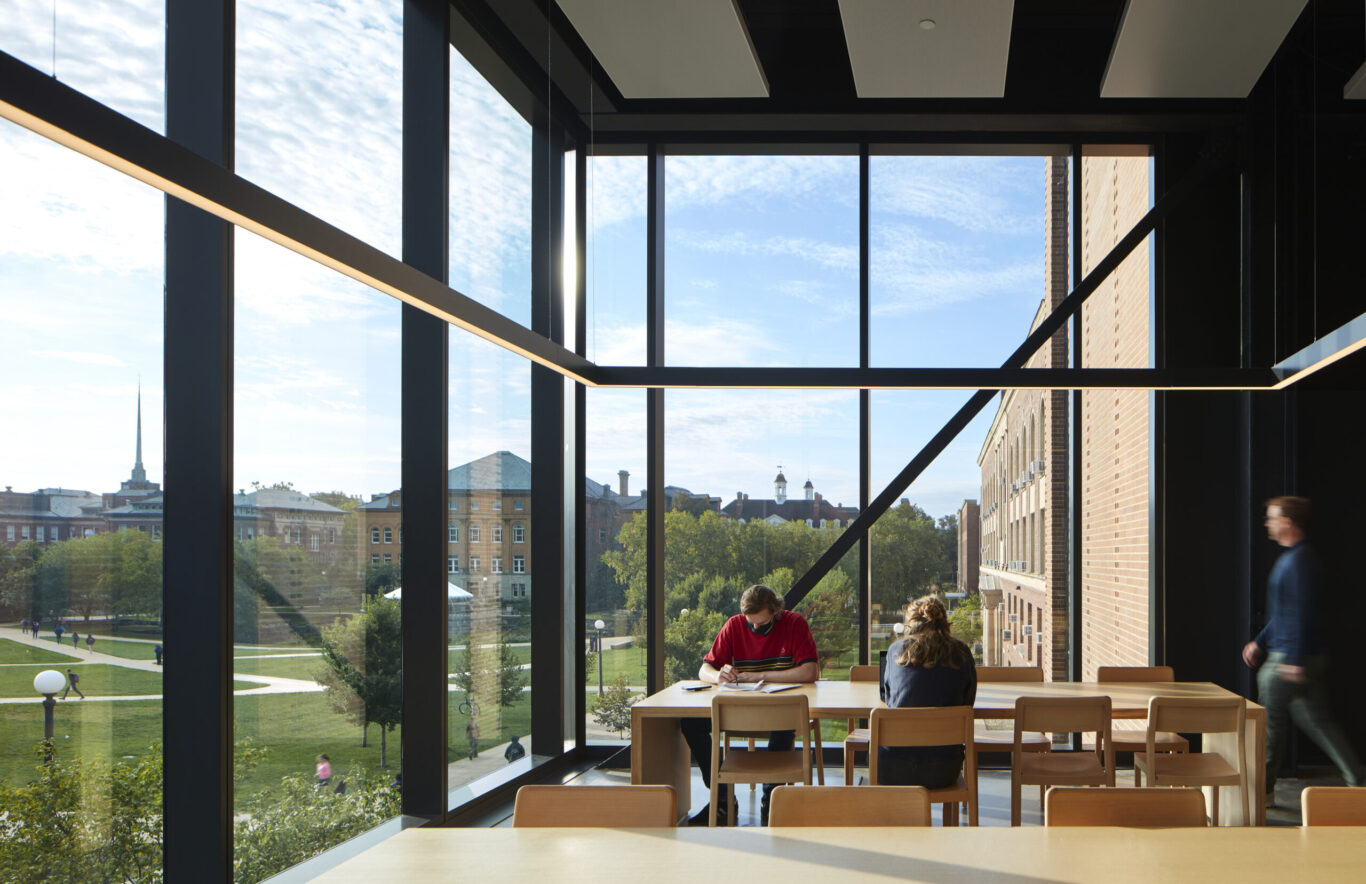
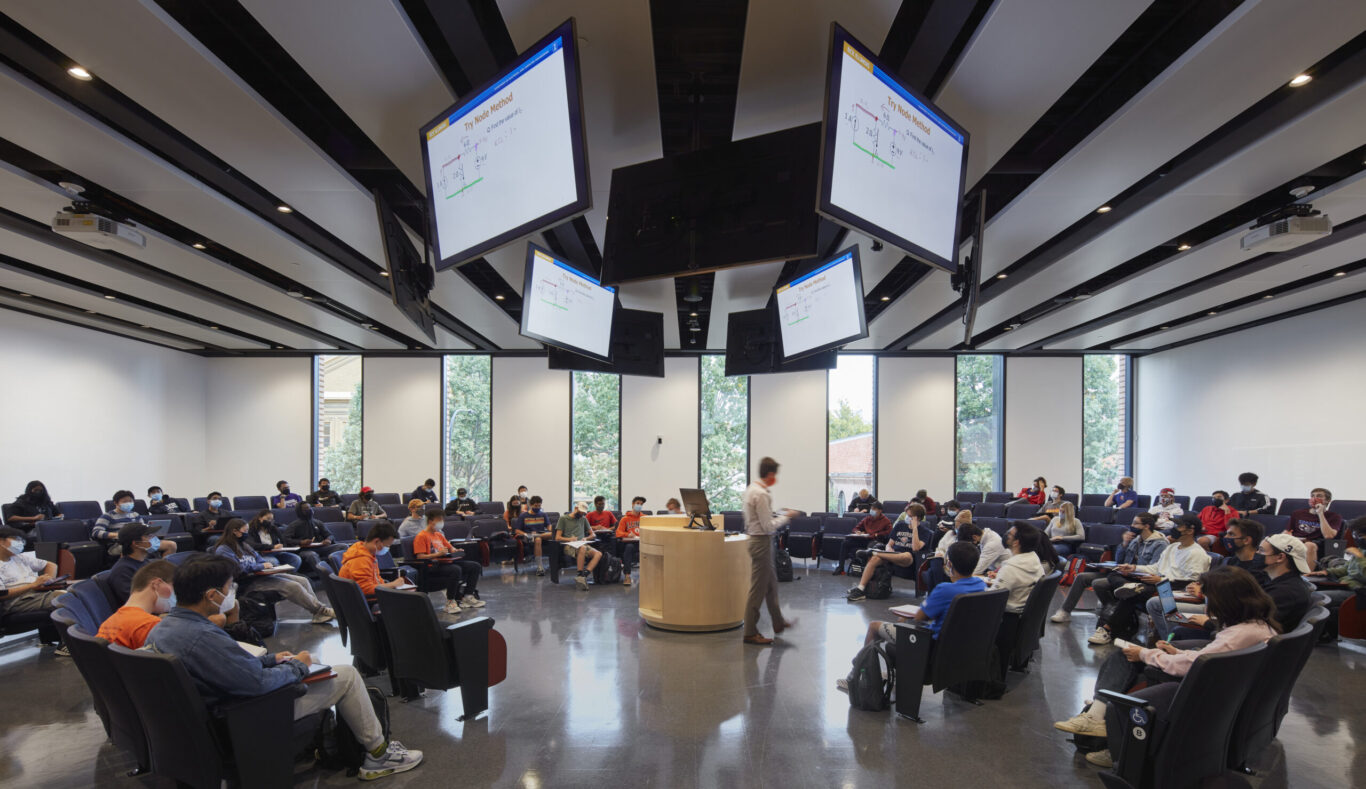
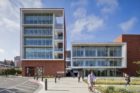
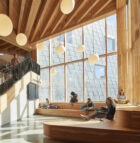
Collaboration hubs on each floor encourage informal gathering, along with the multi-story Study Steps—a gathering space framed by soaring structural trusses, which extend from floor to ceiling and connect with the levels above. A central circulation spine anchors the building’s public spaces, providing views across all floors and overlooking the Bardeen Quadrangle, the library, and the north-south pedestrian axis. A 60-foot long-span space with flexible partitions accommodates large class configurations, while small classrooms are distributed along the building’s core, and a 500-seat auditorium is located in the lower level. Designed to respect and complement the scale and materials of surrounding buildings, the center is clad in brick and curtains of glass, maximizing natural lighting and enhancing views.
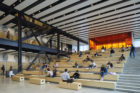
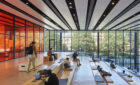
Comprehensive environmental graphics borrow inspiration from the University’s “power of ‘I” campaign by integrating “I” words such as “innovation” and “inclusion” throughout the building. Large graphic portraits of notable alumni are featured throughout the building, fostering a spirit of ambition and institutional pride among students, and instilling a deeper understanding of their legacy within the university and beyond.
Successfully achieving LEED Platinum and LEED Zero Energy certifications, the CIF reached net zero operational carbon in its first year—a milestone in the University’s pledge to reach carbon neutrality across its campus by 2050. The building is also designed to perform 54 percent above the ASHRAE standard and 82 percent above the Commercial Building Energy Consumption Survey standard. The team continues to monitor embodied carbon and whole life carbon post occupancy.
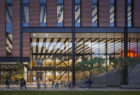
The building has benefited from design measures to reduce maintenance and utility costs, helping it to achieve net zero operational carbon through a reduced window wall ratio, radiant systems, low-VOC materials, electrochromic glazing on the east/west facades for shading, a ground source heat exchange partially funded by a grant from the University’s Student Sustainability Fund, and a photovoltaic allocation from the University’s Solar Farm. The building is all electric, aligning with the University’s decarbonization plans to prepare for a fossil-fuel-free and carbon neutral future.
New York, New York, United States
01/