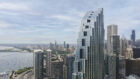
In a new interview with Arabian Business, SOM Consulting Partner Bill Baker discusses how current technologies could theoretically support structures several kilometers tall—and how future advances in materials could extend those possibilities even further. But as the technical limits continue to expand, he argues that the more consequential question is not whether we can build higher, but why we should.
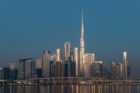
Drawing on his experience as the lead structural engineer of Burj Khalifa, Baker reflects on the innovations that made the 828-meter tower possible. SOM developed the buttressed core structural system and shaped the building’s stepped form to disrupt the organization of wind forces, reducing their impact on the structure. Together, these strategies established a new model for supertall building design.
SOM has continued to advance this research through structural proposals exceeding one kilometer. Building on the principles developed for Burj Khalifa, the firm has explored systems that simplify construction, improve load-bearing efficiency, and enable greater height while using materials more effectively.
The next generation of towers, Baker explains, will require structural innovation to be considered alongside constructability, material use, embodied carbon, economic value, and human experience. As buildings rise higher, questions of movement, comfort, adaptability, and long-term purpose become increasingly important.
“The more important questions are practical ones,” Baker told Arabian Business. “How people move through these buildings, how they adapt to changes in altitude, and whether additional height creates meaningful value for the people who use them.”