One Liberty Plaza

Completed in 1973 as the U.S. Steel headquarters, this office tower employs steel as an expressive structural material. SOM revisited the building to update the lobby, facade, and building systems, modernizing the tower while preserving its character.

Project Facts
  • Completion Year 1973
  • Size Building Height: 743 feet Number of Stories: 54 Building Gross Area: 2,130,000 square feet
  • Rentable Area 1,852,200.00 square feet
  • Collaborators
    Turner Construction Company - Los Angeles Syska Hennessy Group Weiskopf & Pickworth Weidlinger
Renovation Project Facts

    Completion Year
    2026

    Size
    Renovation Area: 13,877 square feet
    Renovation Scope: Lobby, tower glazing and storefront enclosure

    Collaborators
    Gachot Turner Construction Company WSP Thornton Tomasetti TM Light Gensler
Project Facts
  • Completion Year 1973
  • Size Building Height: 743 feet Number of Stories: 54 Building Gross Area: 2,130,000 square feet
  • Rentable Area 1,852,200.00 square feet
  • Collaborators
    Turner Construction Company - Los Angeles Syska Hennessy Group Weiskopf & Pickworth Weidlinger
Renovation Project Facts

    Completion Year
    2026

    Size
    Renovation Area: 13,877 square feet
    Renovation Scope: Lobby, tower glazing and storefront enclosure

    Collaborators
    Gachot Turner Construction Company WSP Thornton Tomasetti TM Light Gensler

Steel as structural expression

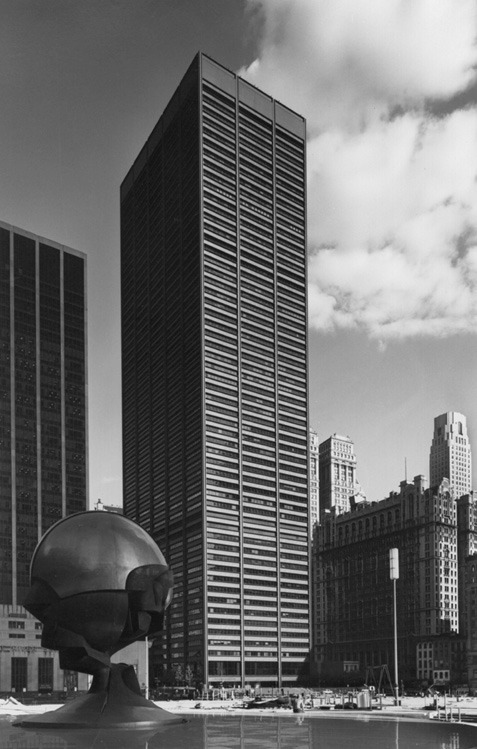
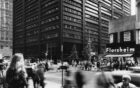
In the late 1960s, U.S. Steel and joint owner Galbreath-Ruffin Corporation commissioned SOM to design a headquarters building in Lower Manhattan that would make bold use of steel as a structural material. Completed in 1973, One Liberty Plaza was the first high-rise office building in New York City with an exposed steel structure. In contrast to the glass curtain walls typical of International Style office towers, the building presents a dense, gridded facade of exposed columns and horizontal spandrels. Deep perimeter girders and a rigid exterior frame resist wind loads and reduce the need for additional cladding. The design showcases steel as both structure and architectural expression while minimizing the need for interior columns, creating open, flexible floor plates. 

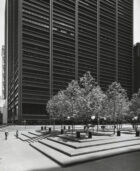
A special zoning resolution allowed the project’s full floor area to be consolidated onto a single block, freeing the adjacent site for a public plaza. Known today as Zuccotti Park, the plaza features a tree-lined landscape, seating areas, and integrated art installations. Below grade, a network of pedestrian connections links the building to the surrounding subway lines and the World Trade Center.
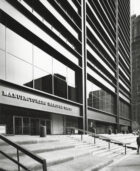
Ezra Stoller | Esto
Bo Parker | Esto

Stewardship across decades

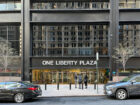
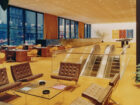
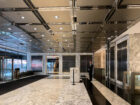
In the 1980s, SOM was commissioned to modernize the lobby and elevator system. The original lobby occupied the second floor, with the ground level dedicated to retail and service needs. This first round of renovations relocated the lobby to the ground floor, making space above for an additional tenant level. The introduction of new marble surfaces and high-chrome finishes updated the interiors. 

Original design. Ezra Stoller | Esto
1980 renovation. © SOM
2026 renovation. Lucas Blair Simpson © SOM

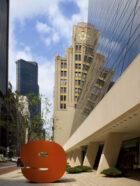
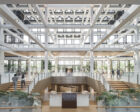
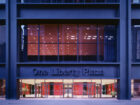
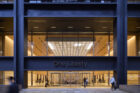
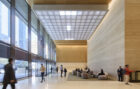
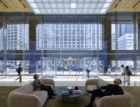
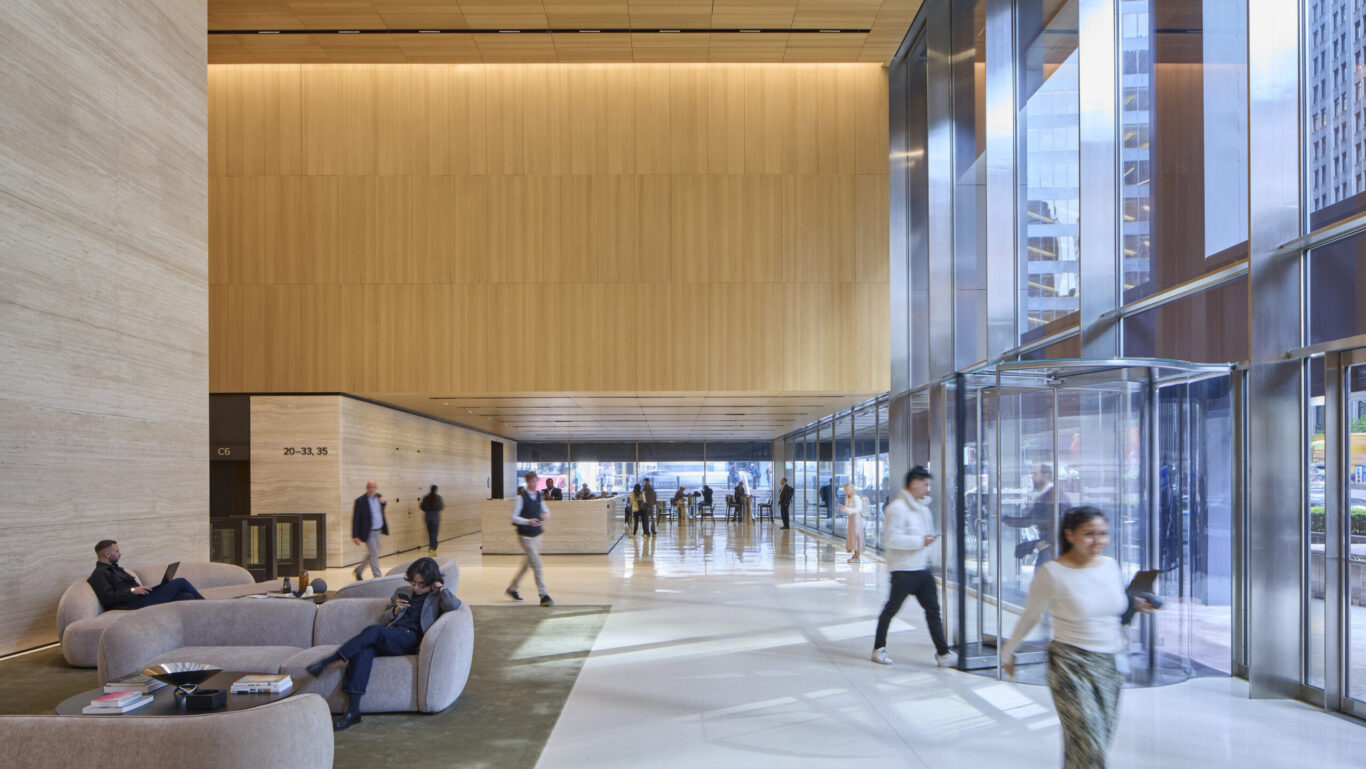
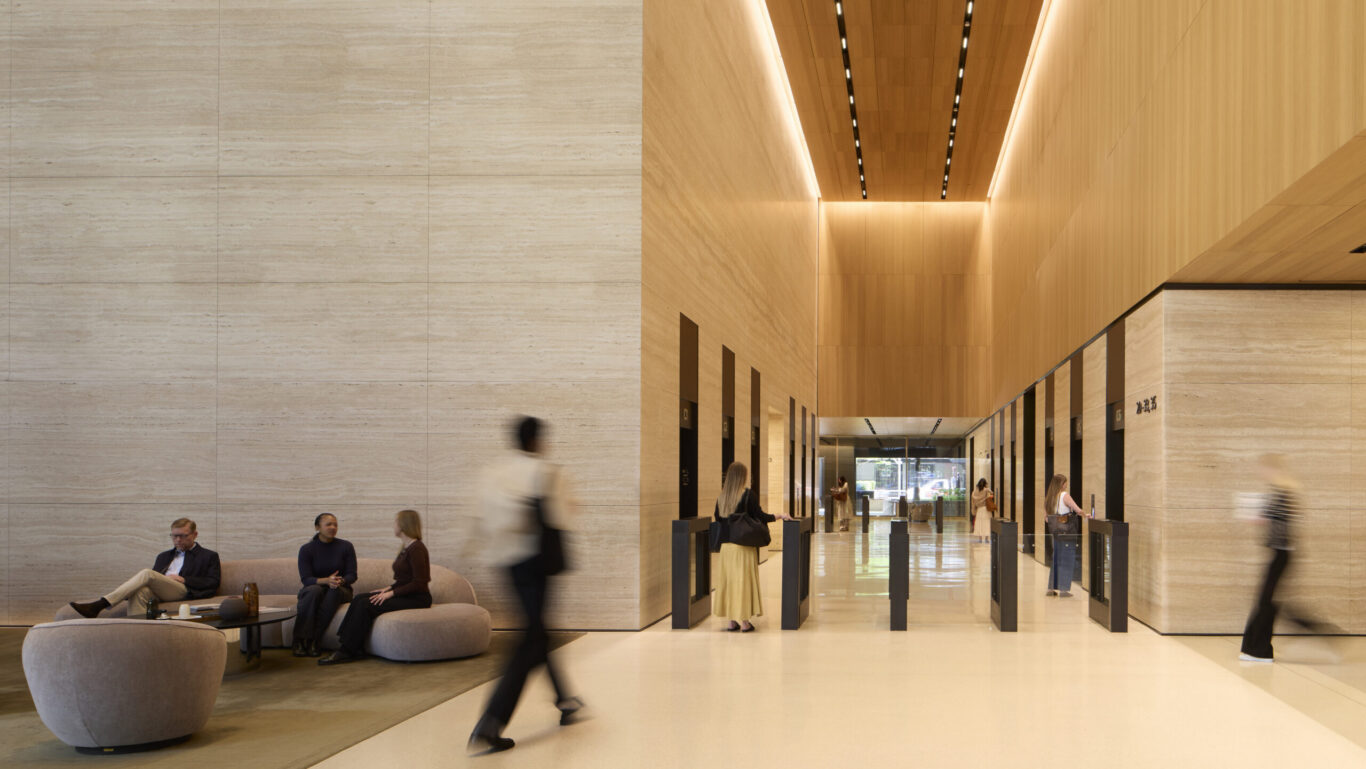
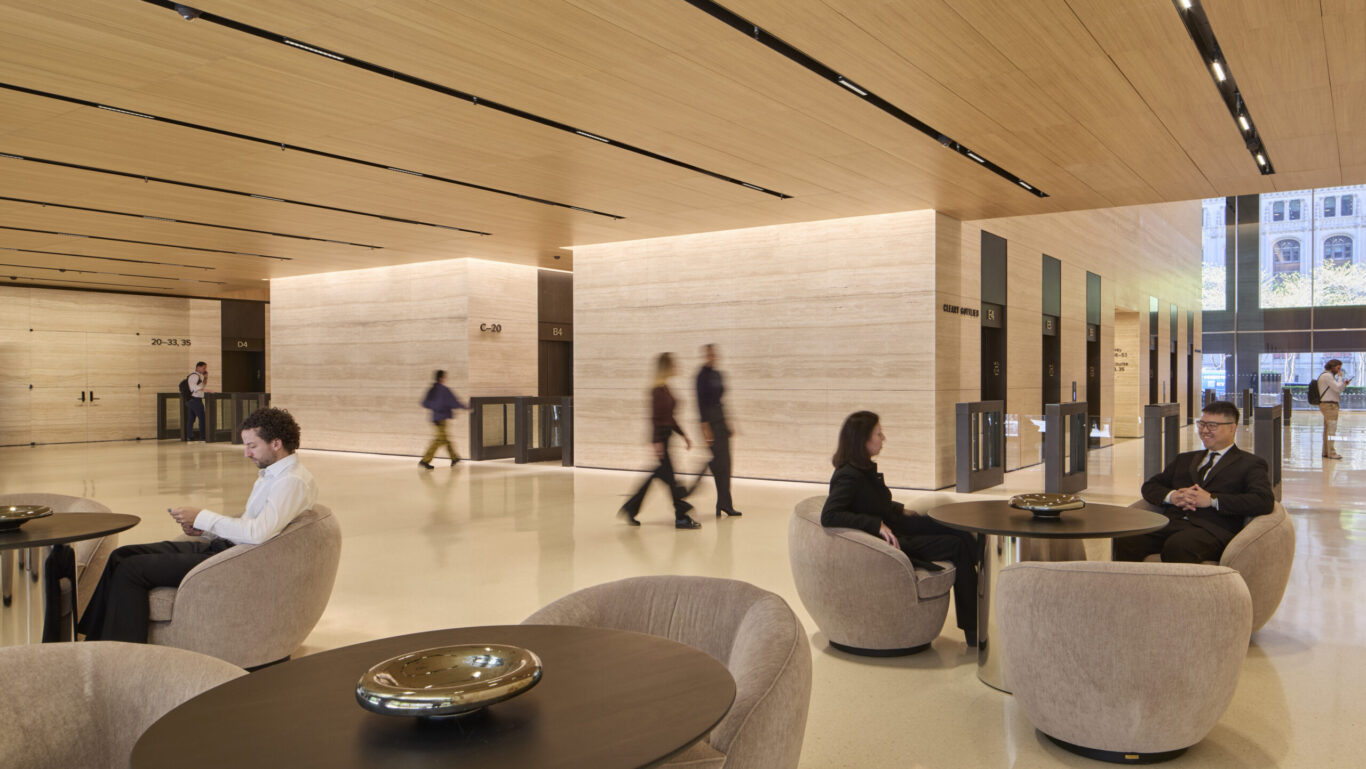
In 2025, SOM was commissioned once again to lead a comprehensive lobby renovation that revitalizes and preserves the building’s steel structure while positioning the office to meet the needs of the 21st-century workplace. The redesign transforms the lobby into a double-height space that establishes a clear and generous arrival experience and introduces sightlines to the park and public realm. The storefront was carefully adapted to improve accessibility and performance while maintaining the proportions, materials, and detailing of the original facade. 

Original design. Ezra Stoller | Esto
1980 renovation. © SOM
2026 renovation. Lucas Blair Simpson © SOM

Designed in collaboration with Gachot, the interiors take cues from hospitality design, incorporating a warm, natural material palette of travertine and stone alongside upgraded finishes and furnishings. A significant contemporary artwork anchors the new space: Atari Light (1999), by Pierre Huyghe, transforms the lobby’s ceiling into a luminous, interactive installation. 

Lucas Blair Simpson © SOM

The renovation significantly improves the building’s environmental performance. Upgrades include new mechanical systems, modernized elevators, and high-performance glazing integrated within the existing mullion system to improve energy efficiency and occupant comfort. Together, these interventions extend the life of the building while aligning it with today’s sustainability standards.

More Projects

01/