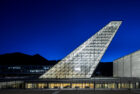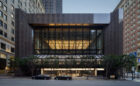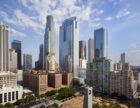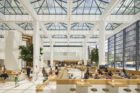
The most resilient buildings are those capable of changing gracefully.
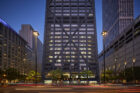
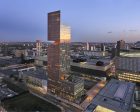
As SOM marks its 90th anniversary, the work of our Adaptive Reuse team offers a real-time study in architectural endurance. Often revisiting buildings designed by our firm decades earlier, the team addresses the friction between timeless form and shifting function. While a building design may endure the test of time, aging mechanical systems and evolving user needs can make renovation and retrofit projects all but inevitable.
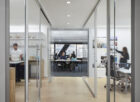
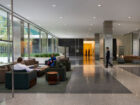
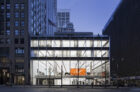
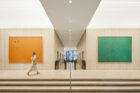
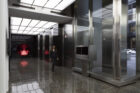
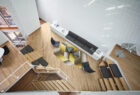
Designing for this shift is a distinct responsibility. And the ability to revisit and update our own designs allows us to act as responsible stewards, honoring the original intent while ushering in the elements that maintain relevance for future generations. We’re seeing formerly siloed offices becoming vibrant, social ecosystems. Once-private towers are opening their street-level plazas and gardens to the public. And many mid-century modern buildings—designed with clear structural and planning logic—are proving capable of accommodating new programming without compromising the original architectural identity. This work makes a strong case that preserving legacy and pursuing innovation can be one and the same.
On the occasion of Preservation Month, members of our Adaptive Reuse studio reflect on projects that define our legacy and are being reimagined to serve their users for decades to come.