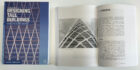
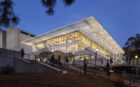
Routledge has published the third edition of Mark Sarkisian’s book, Designing Tall Buildings: Structure as Architecture. This significantly expanded edition updates the original text with new illustrations, updated code equations, and four new chapters concentrated on contemporary challenges in high-ride design with a focus on concepts, optimization, carbon, and timber.
As Sarkisian notes in the text, the book’s goal remains “urging the integration of structure and architecture for buildings of superior performance, sustainability, and aesthetic excellence.” The new material bridges the gap between an initial concept taking shape on paper and its real-world physical performance.
The projects used as examples throughout the text highlight SOM’s extensive portfolio of work. Sarkisian uses conceptual hand drawings from decades of practice to show how early structural thoughts spark architectural forms. Building on those early ideas, the textbook demonstrates how advanced computational methods optimize design at macro and micro scales. By using energy principles and finite element tools, engineers can pinpoint exact material placement to create efficient structures that cut down on embodied carbon.
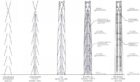
The new edition also connects embodied carbon reduction directly to material choices like mass timber. Instead of treating sustainability as an add-on, it frames carbon management as a basic design requirement alongside life safety. It provides clear frameworks for tracking embodied carbon while detailing code compliance and preassembly strategies for mass timber towers.
Building codes, computational tools, and carbon targets have changed or in some cases established for the first time since the last edition. This book gives architects and engineers the practical framework needed to navigate those changes and maintain a forward-looking approach to tall building design.
Designing Tall Buildings: Structure as Architecture (Third Edition) is available now through Routledge and Amazon.