Research
Inspired by the mechanics of human joints, SOM's patented Pin-Fuse systems protect buildings during earthquakes by allowing for a controlled range of movement—an innovation that revolutionizes seismic structural resilience.
SOM’s structural engineering team has developed a collection of innovative seismic protection systems to improve building safety and resilience during and after earthquakes. In 2002, SOM engineers began developing Pin-Fuse technology, a series of patented structural applications that redefine traditional steel-frame construction and seismic resilience. In conventional steel moment-resisting frame systems, the vertical columns and horizontal beams are connected by rigid connections to form a robust structural grid that resists lateral forces like wind and seismic through bending and rotation. While effective, typical steel moment frame connections are designed to yield under strong seismic forces and can permanently deform—necessitating expensive building repairs or even potential demolition after a major earthquake.
Pin-Fuse technology introduces elastic connections designed to prevent permanent deformations. These systems enhance occupant safety, preserve building integrity, and reduce the financial and structural impact of large-scale seismic events.
Inspired by the mechanics of human joints, SOM developed the Pin-Fuse Joint as the foundational innovation for improving seismic resilience in building design. These joints connect to columns in special horizontal moment connections. They incorporate a circular end connection, secured by slip-critical friction bolts that fasten the steel end plates. A steel pin in the center of the joint enables controlled rotation.
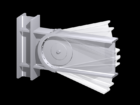
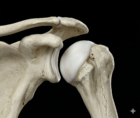
The Pin-Fuse Joint resists typical building movements—whether from occupant activity, moderate seismic loads, or lateral forces from wind—through friction between its end plates, preventing slipping against friction surfaces under normal conditions. During a significant earthquake, when forces exceed a critical threshold of slippage, each joint activates, dissipating energy by enabling controlled movement and rotation. This allows the building’s frame to flex and respond dynamically to seismic motion, resisting bending and shearing with motion controlled by friction in the joints.
After the tremors subside, the steel frame and joints return to equilibrium, naturally realigning as the building tries to recenter, and restoring its structural integrity. In an extreme case following a major earthquake, each joint may require manual recalibration, by loosening some bolts, to bring moment connections back to their original form—ultimately re-centering the building’s entire structural frame and allowing occupants to safely return much sooner. Every component is designed to remain intact after a quake, eliminating the need for replacements and significantly reducing long-term maintenance costs compared to traditional lateral systems.
SOM’s Pin-Fuse Joint is available in steel and timber configurations, designed for efficient prefabrication, which can reduce field labor time. It also laid the foundation for the structural engineering team to develop other state-of-the-art seismic protection systems—including the Pin-Fuse Frame, Fuse Brace, and Link-Fuse—for new and existing buildings.
SOM collaborated with the University of Southern California to test the Pin-Fuse Moment Connection in a full-scale frame configuration. Friction plates clamped with bolts placed in a radial pattern around a single shear pin are used for moment resistance with a cyclic loading protocol per AISC 341, Appendix K, evaluating strength degradation and drift capacity. Prior to the full-scale tests, friction tests were conducted using the friction material within the joint to determine its coefficient of friction—a key value quantifying resistance to motion. This information is essential for seismic protection design, as the joint’s function relies on controlled friction. The coefficient of friction measured during testing enabled SOM to validate the design and predict when the joint will slip and activate, safeguarding the building during an earthquake.
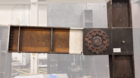
SOM is currently seeking prequalification of Pin-Fuse Moment Connection from Connection Prequalification Review Panel (CPRP) at American Institute of Steel Construction (AISC) based on the successful completion of full-scale tests at USC. Once the connection is prequalified by the CPRP and included in AISC 358 standard, the specific steel moment connection can be used for seismic applications, without requiring separate qualification testing for each project. The prequalification will set the design, detailing, and quality criteria for these approved connections to ensure they perform as intended in special and intermediate steel moment frames.
The patented Pin-Fuse Frame leverages SOM’s structural engineering expertise in seismic protection, advancing the next generation of resilient building systems. The all-in-one Pin-Fuse Frame structural system is designed for buildings in seismically active regions, integrating a sophisticated network of columns, beams, and plate assemblies that seamlessly connect structural elements. Special configurations incorporate a diagonal brace that enhances structural stability and reinforces the system’s seismic resilience.
The Pin-Fuse Frame utilizes specialized plate assemblies, securely fixed to columns and connected to beams and braces through four integrated Pin-Fuse Joints at each corner. The diagonal brace is divided into two segments, affixed to connection plates that accommodate slippage and movement. During a seismic event, the frame drifts laterally while the diagonal brace—when engaged—stretches back and forth, allowing the building to sway and ultimately re-center itself.
01/