Project
Loyola Marymount University – School of Film and Television Graduate Building
Los Angeles, California, United States
The sensitive redesign of a historic building at Vanderbilt University balances restoration and revitalization.
Kirkland Hall was one of the first buildings to be constructed at Vanderbilt University. The structure, originally known as “Main Building,” has undergone several transformations since its initial construction. Built in 1875 in a Victorian Gothic style, the building was rebuilt after a 1905 fire in red brick and stone, with a prominent tower that has made the Italianate-style building a prominent campus landmark ever since. Recently, the university’s new chancellor initiated a substantial renovation project to coincide with Vanderbilt University’s sesquicentennial celebration. The work aims to preserve and restore this important heritage building and also to reimagine its interior, reflecting the values that underpin the university’s reputation.
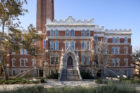
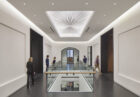
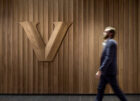
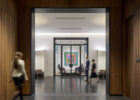
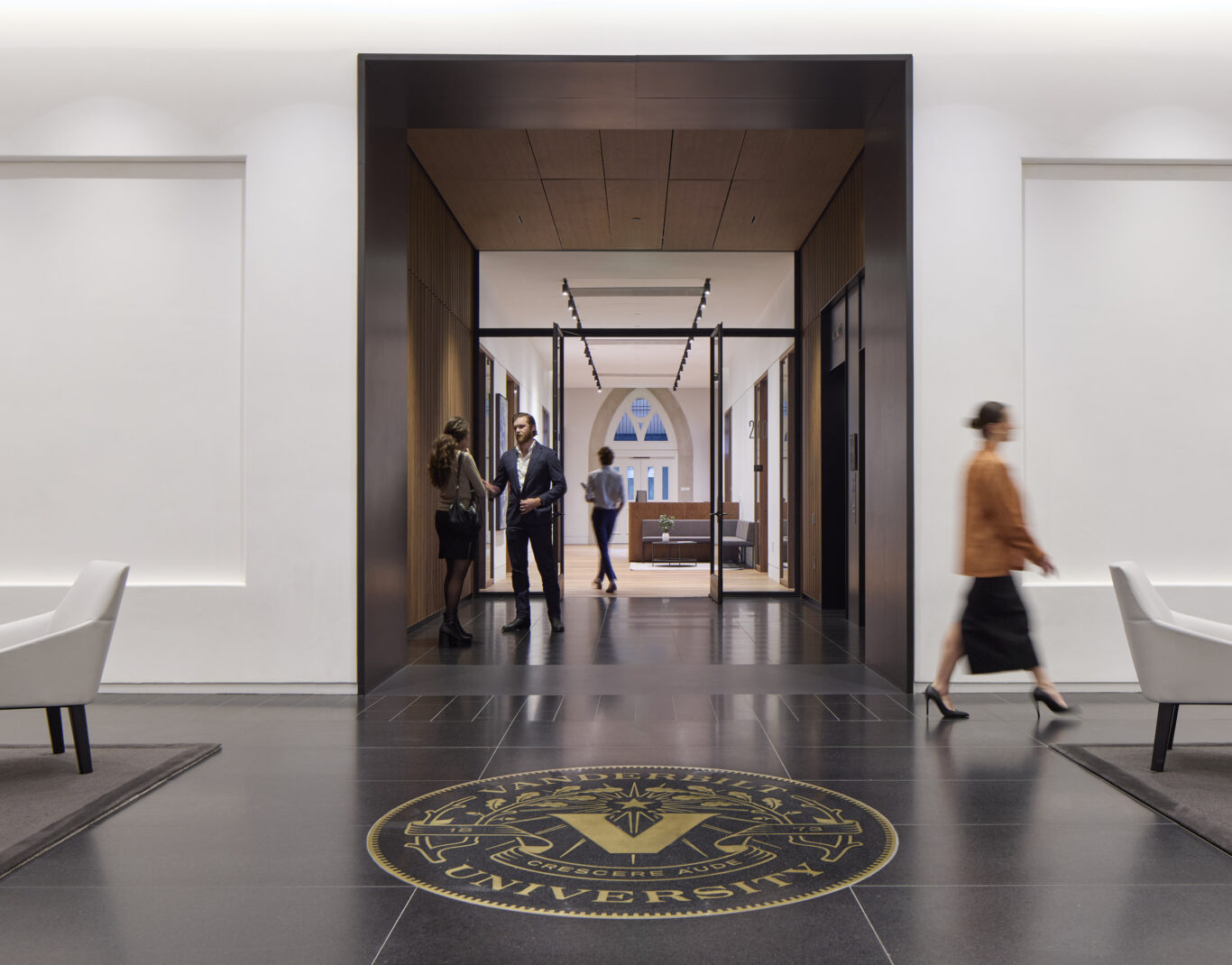
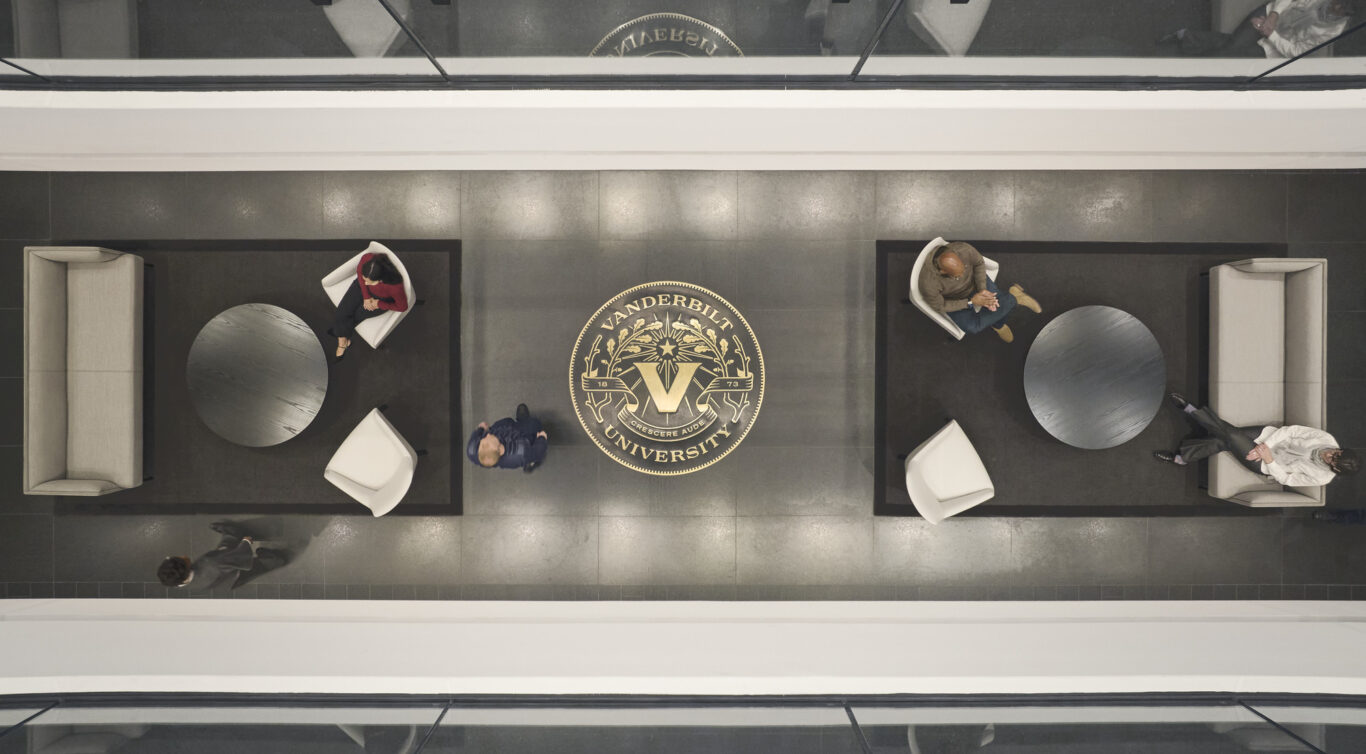
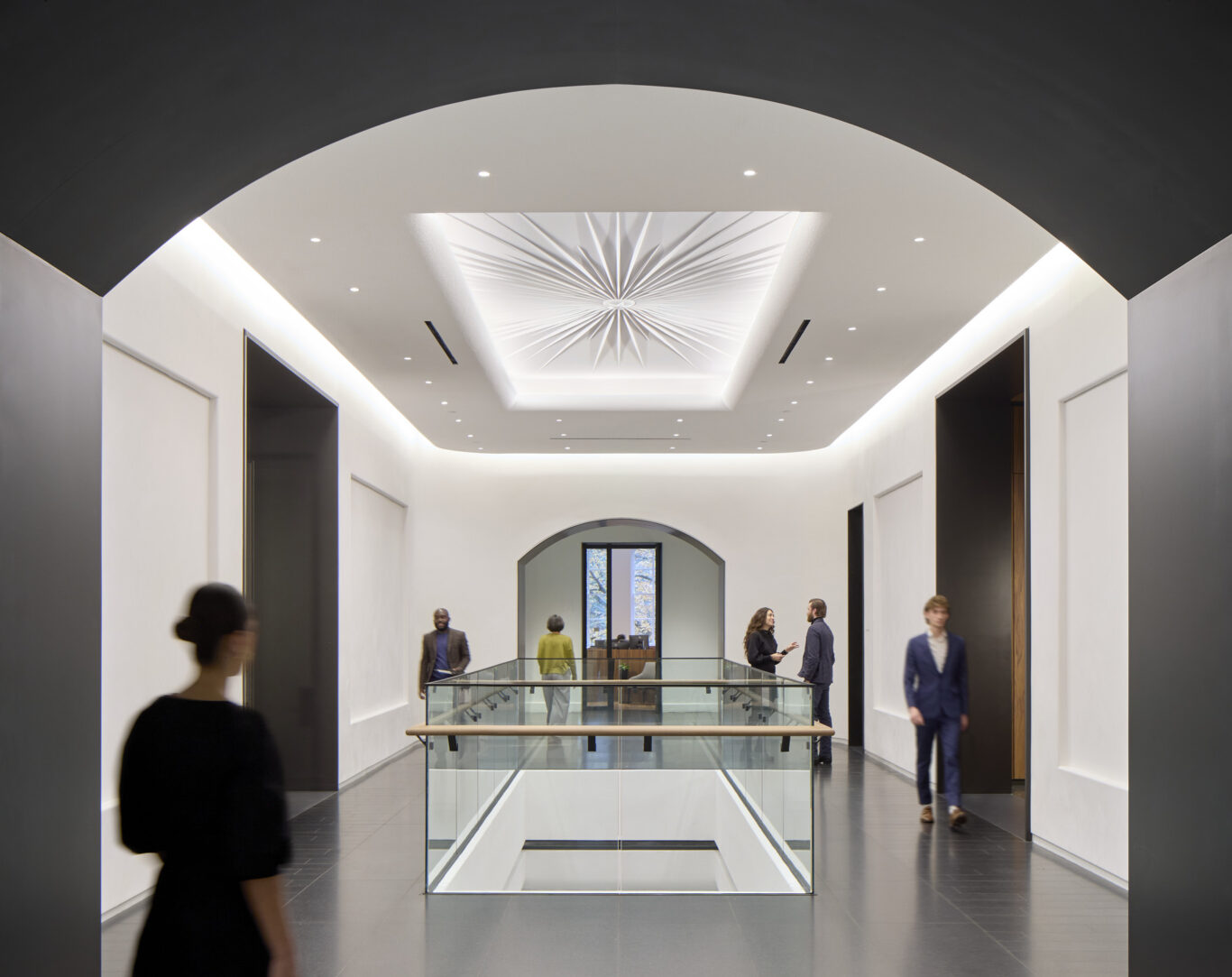
The redesign has transformed the entry procession, aiming to elevate the experience for donors and other campus visitors. Three wings are connected by two main corridors in a cross-shaped floor plan, with load-bearing masonry walls defining much of the central pathways. Upon entering the building, guests traverse the walnut-clad vestibule on the second floor, leading to the central gallery showcasing the new school seal inlaid in the dark granite floor. An opening in the ceiling above connects the second and third floors, revealing a bas-relief insignia of the north star from the university’s logo on the third-floor ceiling. The double-height central gallery features a variety of seating arrangements, including sofas and chairs for informal gatherings, with views of the upper mezzanine.
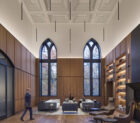
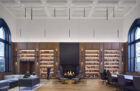
On the third floor, visitors are invited into the reimagined Alexander Heard Suite. The room’s original coffered ceiling has been restored and outfitted with an array of contemporary pendant lights. Gridded walnut wood paneling lines the room, integrating shelving with warm backlighting. The room’s original windows, previously replaced by aluminum-framed storefront windows, have now been restored with historically appropriate wood frames with insulated glazing, concealed shades, and bronzed metal sills and jamb liners. A fireplace surfaced in angled steel panels adds a touch of modernity, and the room’s furniture is arranged for different types of meetings, offering conference tables or sofas for more intimate gatherings.
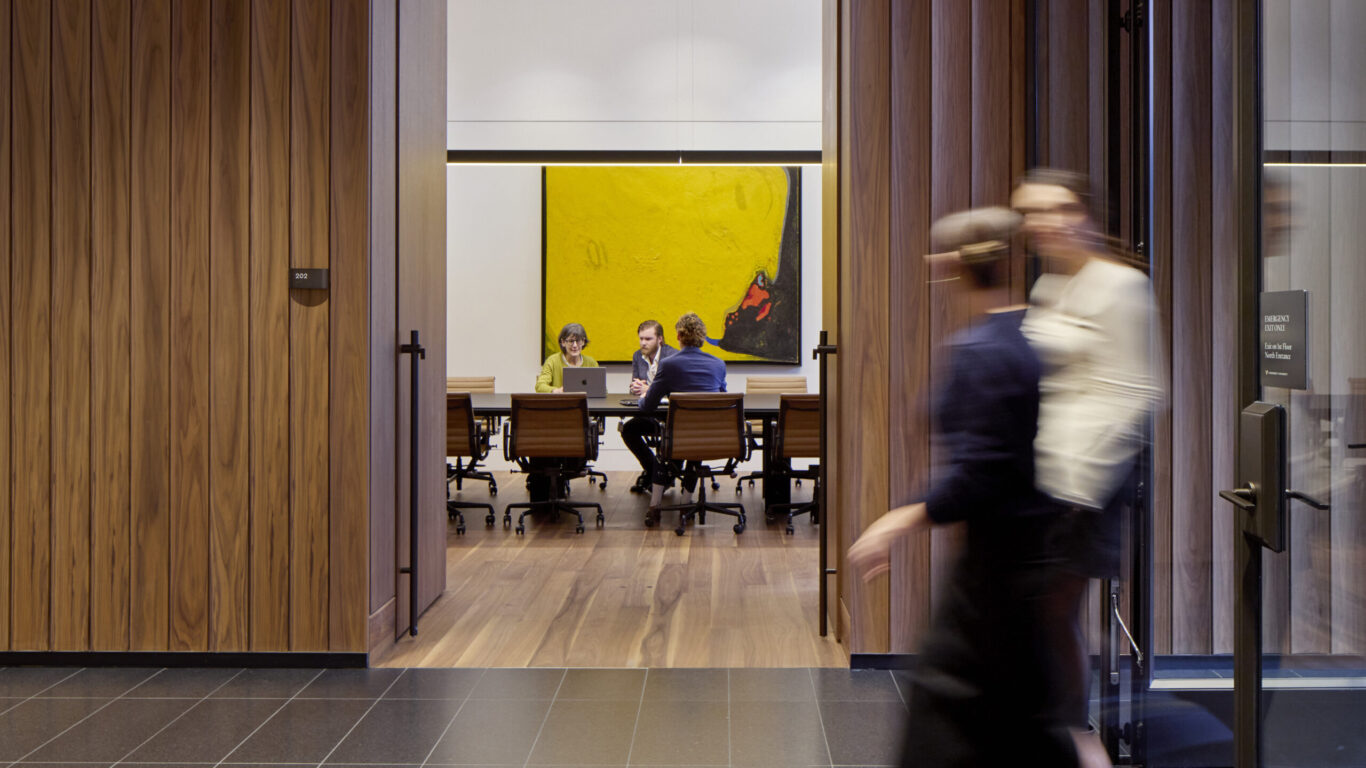
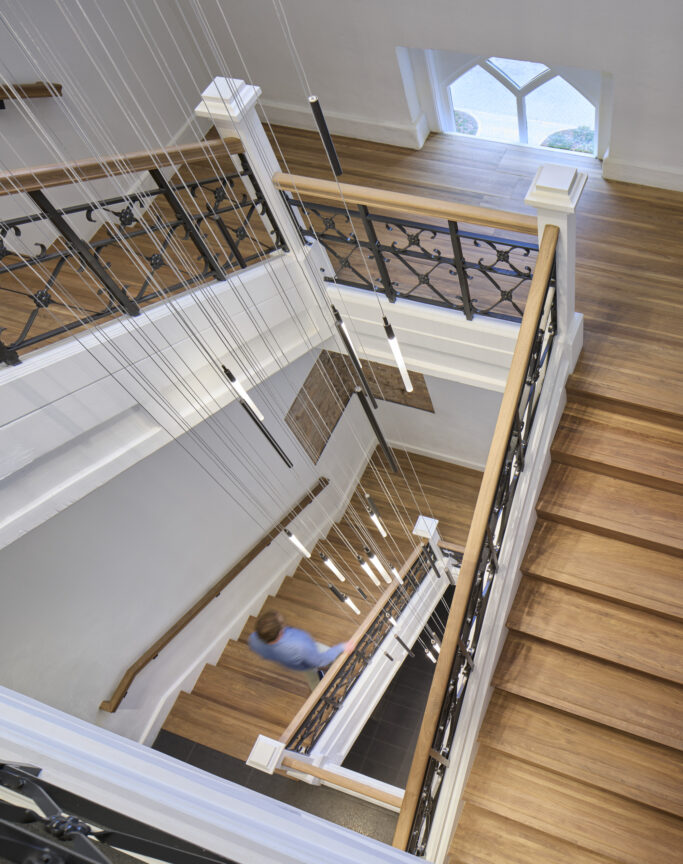
The transformative effort goes beyond aesthetics, incorporating critical infrastructure improvements and promoting inclusivity by enhancing universal accessibility. Throughout the building, offices have been redesigned to better serve the university’s staff, introducing social break rooms and meeting spaces to enhance communication between departments.
Los Angeles, California, United States
Philadelphia, Pennsylvania, United States
01/