Head-Royce School

SOM’s master plan for a historic K–12 institution in California’s East Bay reimagines the campus with sustainable, flexible classrooms, outdoor learning environments, and retrofitted historic buildings—creating spaces that support 21st-century education.

Project Facts
  • Completion Year 2025
  • Design Finish Year 2023
  • Size Site Area: 8 acres
  • Landmark Status Rehabilitation and reuse of three historic resources, originally designed by Reed & Corlett in Spanish Colonial Revival style.
  • Year Originally Built 1929
  • Collaborators
    University Of Hong Kong - Faculty Of Architecture Sherwood Design Engineers Tom Leader Studio Inc
Project Facts
  • Completion Year 2025
  • Design Finish Year 2023
  • Size Site Area: 8 acres
  • Landmark Status Rehabilitation and reuse of three historic resources, originally designed by Reed & Corlett in Spanish Colonial Revival style.
  • Year Originally Built 1929
  • Collaborators
    University Of Hong Kong - Faculty Of Architecture Sherwood Design Engineers Tom Leader Studio Inc

Planning the future of a historic institution

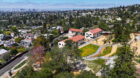
Founded in 1887 as the Anna Head School for Girls in Berkeley, Head-Royce School has a long legacy of K-12 education in California’s East Bay. The private institution relocated to its current campus on Lincoln Avenue in Oakland in 1964. In 1979, the school merged with the all-boys Royce School to form the gender-inclusive Head-Royce School. Today, it serves approximately 900 students from diverse backgrounds across 22 acres— of which eight acres were acquired in 2013—spanning two campuses divided by a major thoroughfare.

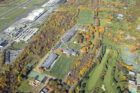
Committed to developing students of character, intellect, and creativity, Head-Royce School commissioned SOM in 2014 to craft a long-range master plan aimed at revitalizing its North and South Campuses. This 10-to-15-year vision supports the school’s goal of advancing a new academic curriculum within a sustainable, flexible 21st-century learning environment—featuring dynamic educational spaces, integrated landscape design, and a strengthened sense of community. The plan incorporates the newly acquired eight acres to unify and expand the campus, while addressing priorities such as traffic mitigation, sustainability, outdoor learning, hybrid indoor-outdoor spaces, gathering areas, and a revitalized performing arts facility.
© TLS LAndscape Architecture

A collaborative design process

The first phase included the retrofit and adaptive reuse of three historic educational buildings, a new outdoor amphitheater, and a loop road encircling the South Campus to ease traffic congestion on Lincoln Avenue during morning and afternoon drop-off and pick-up. Future plans may include a new performing arts center and an underground pedestrian tunnel beneath Lincoln Avenue, providing a safe and seamless connection between the two campuses.

The master planning process was deeply collaborative, involving years of engagement with faculty, alumni, students, parents, neighbors, and the City of Oakland. Input from this diverse group of stakeholders guided the design team and school leadership in envisioning the institution’s future. Expert analysis, on topics from historic building assessments to stormwater management, guided the plan, alongside a Design Working Group appointed by the Board of Trustees to ensure a thoughtful balance of heritage, place, and forward-looking educational design.

© TLS LAndscape Architecture

Transforming historic structures for modern learning

As part of phase one of the master plan, three historic campus buildings, Buildings 0, 1, and 2—now respectively named Josiah Royce Hall, Dewey Hall, and The Lee Family STEM Center—have been thoughtfully retrofitted. Their original facades remain largely intact, anchoring the South Campus in a Spanish Colonial Revival style that honors the campus’s architectural legacy. Inside, outdated, compartmentalized layouts are reimagined as open, flexible learning environments that are designed for seismic resilience.

© SOM

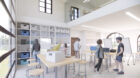
Josiah Royce Hall is home to the school’s choral program. Dewey Hall has one classroom and several offices on the first floor and classrooms on the second floor. The first floor of the STEM Center is the school’s “Collaboratory,” which contains a makerspace,  tool shop, and digital fabrication studio. The second floor houses the robotics program and additional instructional spaces.

During early investigations for Josiah Royce Hall, the design team uncovered a series of concealed trusses hidden for decades behind dropped ceilings. Referencing the original architectural drawings, SOM confirmed that both the trusses and the wood-paneled ceilings above had once been fully exposed, revealing the building’s original spatial character. This discovery shaped the adaptive reuse strategy, enabling the restoration of the interior to its original height and essence—using modern materials to significantly improve energy performance in the space. Restored historic steel sash windows facing Lincoln Avenue invite natural light into the space. A spacious second-level terrace offers students, teachers, and campus visitors a place to gather outdoors and take in sweeping views of the East Bay.

Dewey Hall was outfitted with new windows that offer views of the surrounding landscape and two large science classrooms with vaulted ceilings. The Lee Family STEM Center anchors the South Campus’ robust science program, a large classroom, ample storage, and dedicated space for experimental tools that fosters hands-on learning. The building also includes a new Collaboratory with a digital fabrication lab and tool room designed to support project-based learning and spark creativity and imagination. Across the South Campus, new breakout nooks, huddle rooms, and gathering spaces offer opportunities for students and faculty to connect—fostering empathy and mutual respect.


Embracing the landscape as a living classroom

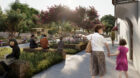
Outdoor learning spaces became a priority in the master plan. The school encourages students and teachers to engage with the natural ecology of its campuses, embracing outdoor learning as an important extension of the classroom. This philosophy infuses the landscape with a spirit of rewilding—fostering connection with nature and inspiring new ways of thinking, growing, and Learning.

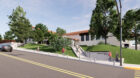
SOM collaborated with Berkeley-based Tom Leader Studio to design a new campus entry and a landscape that integrates teaching gardens, outdoor classrooms, and native plantings—cultivating a deeper appreciation for nature and promoting joyful, healthy living.

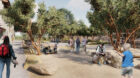
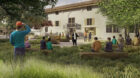
Logs were repurposed from fallen trees to serve as seating, while an outdoor garden was introduced to support experiential learning. A steep hillside has been transformed into a central amphitheater, now a gathering space for events, performances, and ceremonies.

© TLS LAndscape Architecture

More Projects

01/