Corso Italia 23

With an innovative approach to retrofit and renovation, SOM has transformed a 1960s modernist office complex into a dynamic and verdant campus, connected to its central Milan neighborhood.

Project Facts
  • Status Construction Complete
  • Completion Year 2024
  • Size Building Gross Area: 49,891 square meters
  • Year Originally Built 1962
  • Sustainability Certifications
    WELL Platinum LEED ID+C Platinum
  • Collaborators
    Proger S.P.A. BMS Progetti Manens-Tifs Filippo Cannata Systematica TA Architettura Jacobs Italia
Project Facts
  • Status Construction Complete
  • Completion Year 2024
  • Size Building Gross Area: 49,891 square meters
  • Year Originally Built 1962
  • Sustainability Certifications
    WELL Platinum LEED ID+C Platinum
  • Collaborators
    Proger S.P.A. BMS Progetti Manens-Tifs Filippo Cannata Systematica TA Architettura Jacobs Italia

Repositioning a modernist office complex for the future

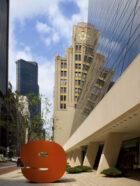
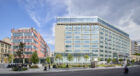
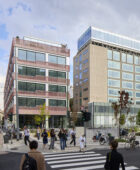
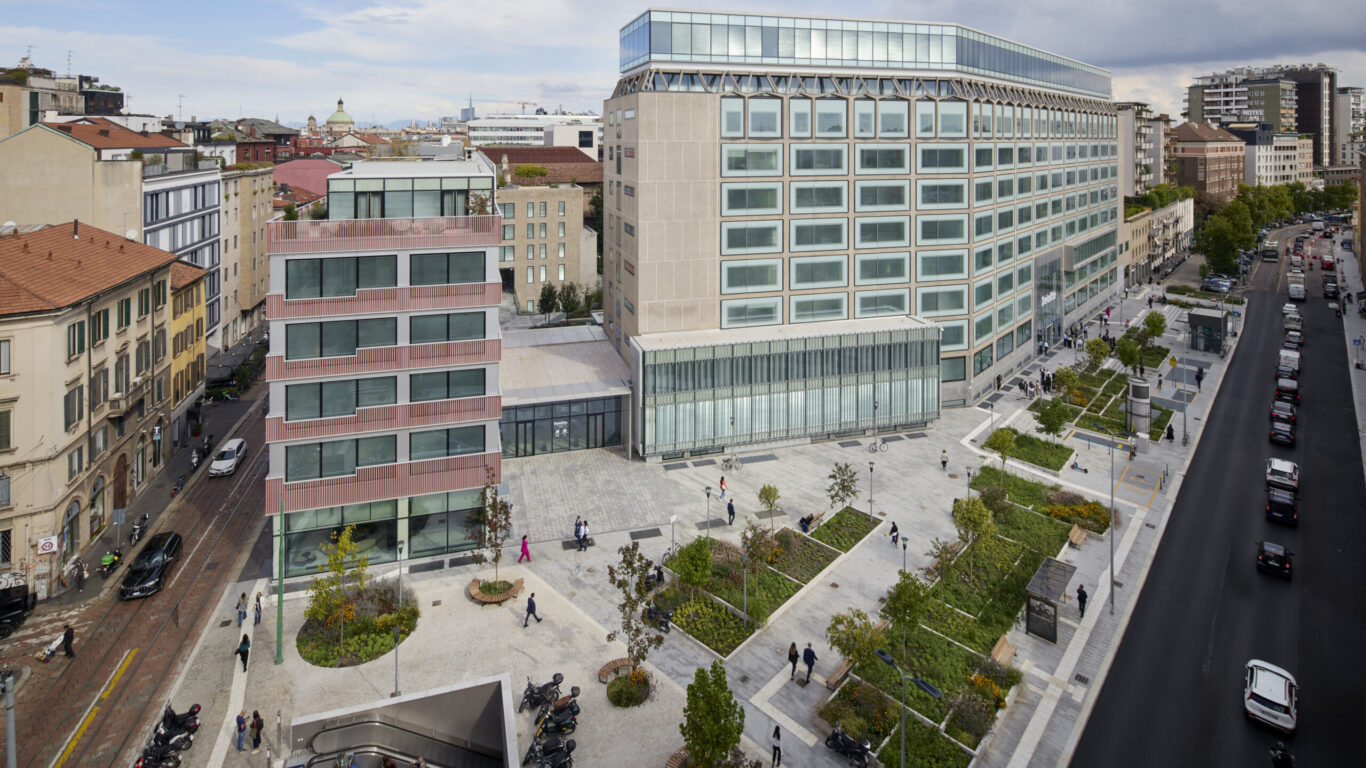
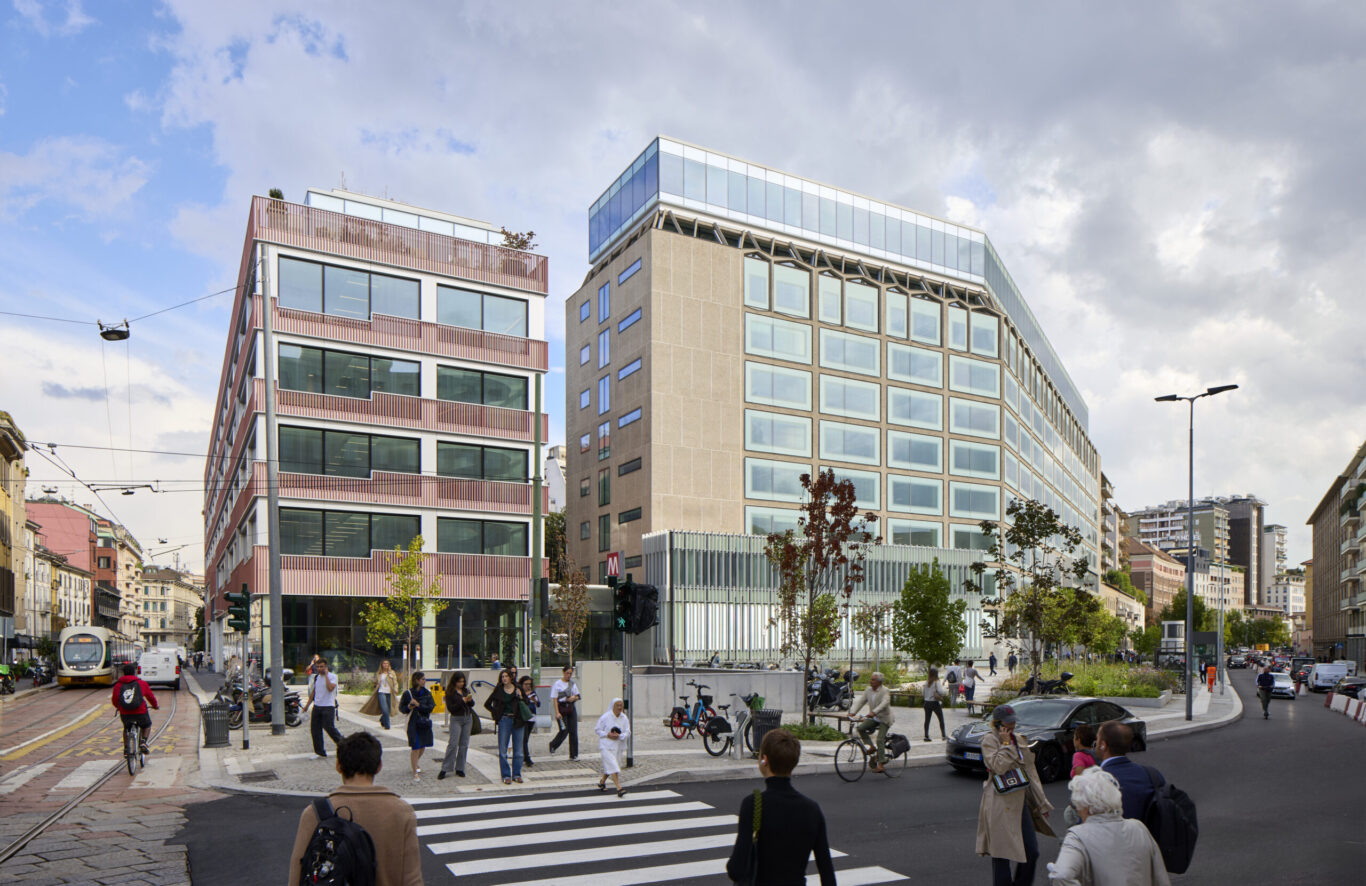
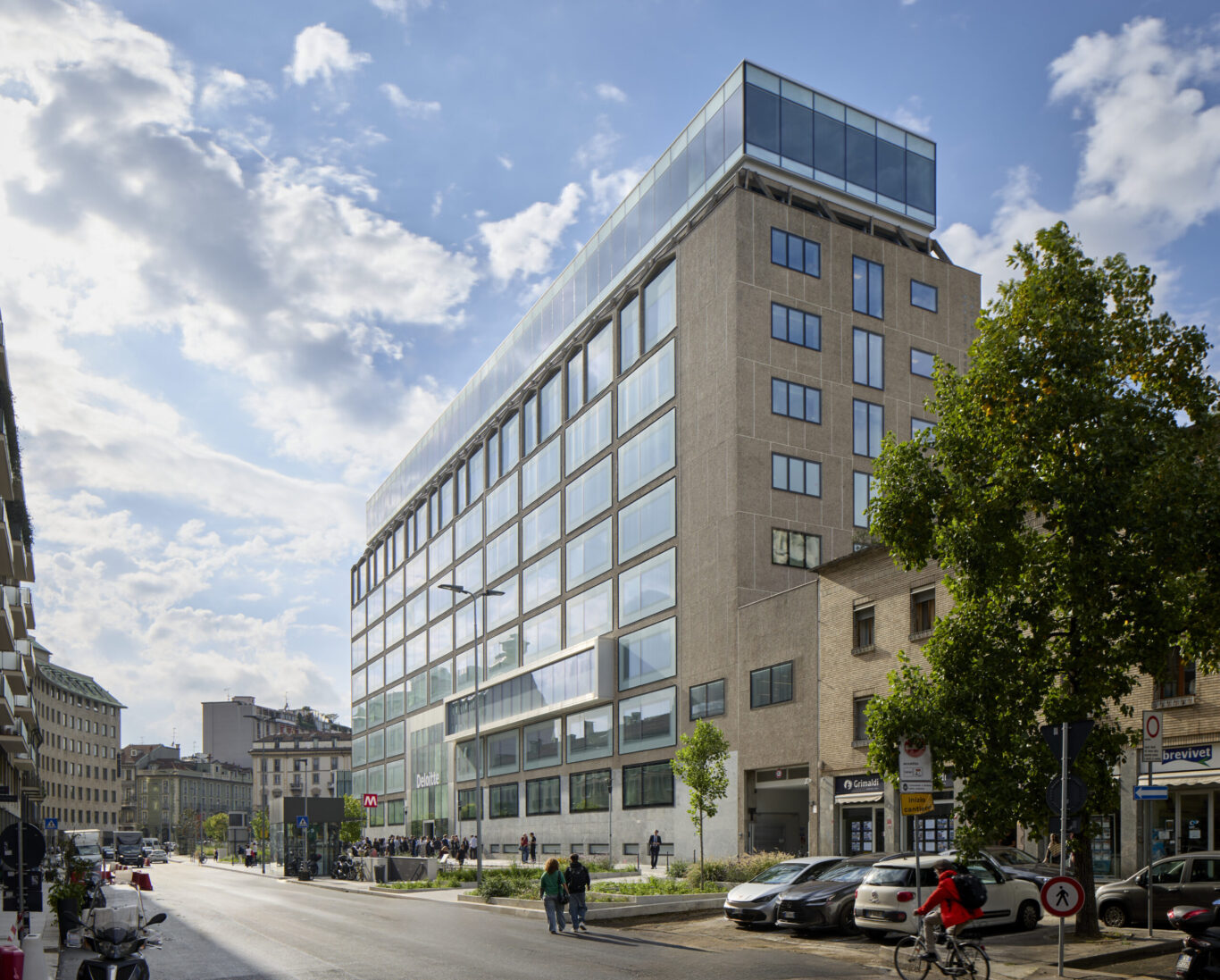
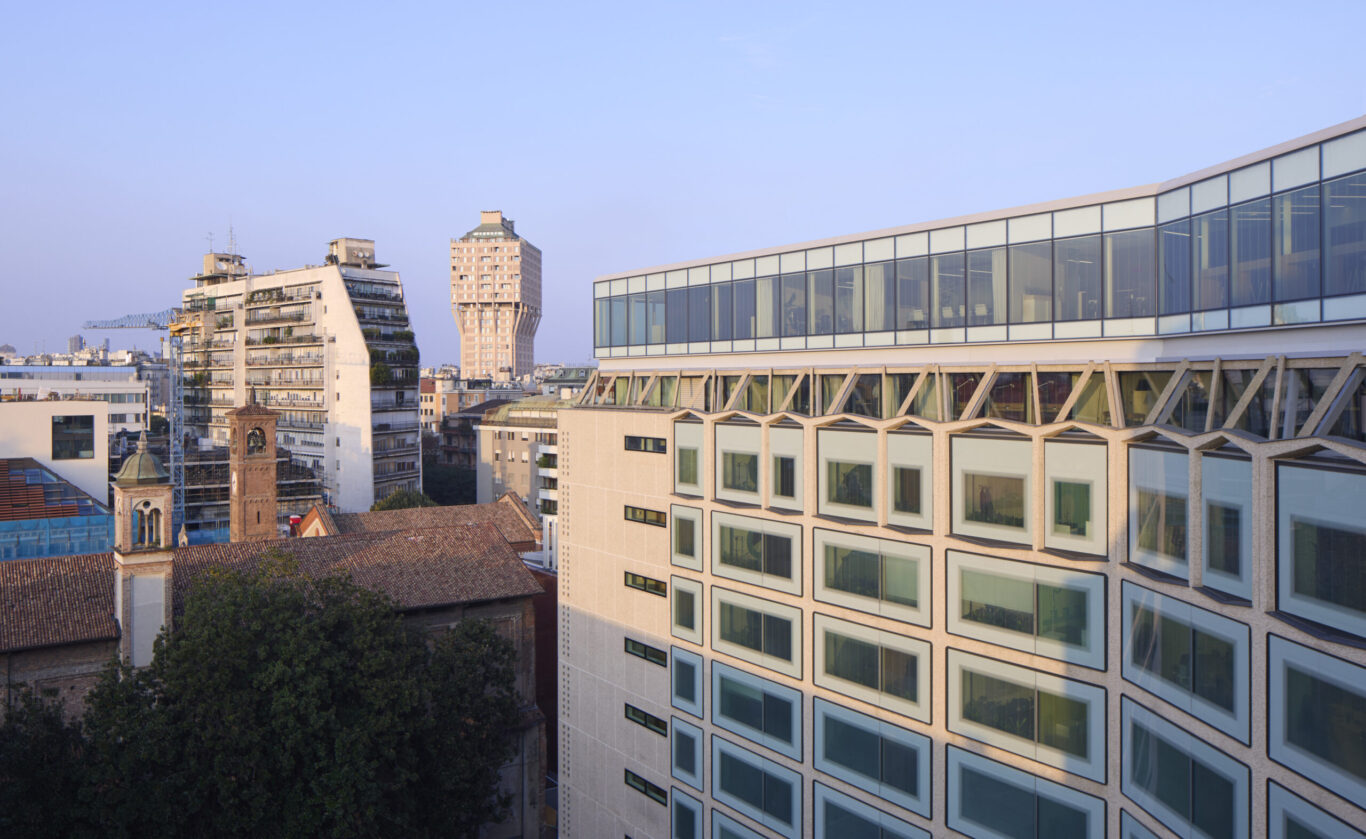
Defining an entire urban block, the Corso Italia complex comprises three distinct buildings that each relate to the scale and materials of the surrounding historic architecture. Originally designed in the 1960s by the studio Ponti Fornaroli Rosselli with Piero Portaluppi, it represents a unique collaboration among some of the city’s leading modernist architects. While innovative in its time, its age had begun to show more than fifty years since its completion; the complex was in need of a retrofit to meet contemporary standards for a world-class workplace. In 2018, SOM was selected to imagine its next chapter.
Dave Burk © SOM

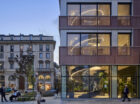
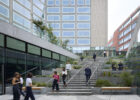
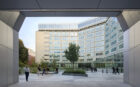
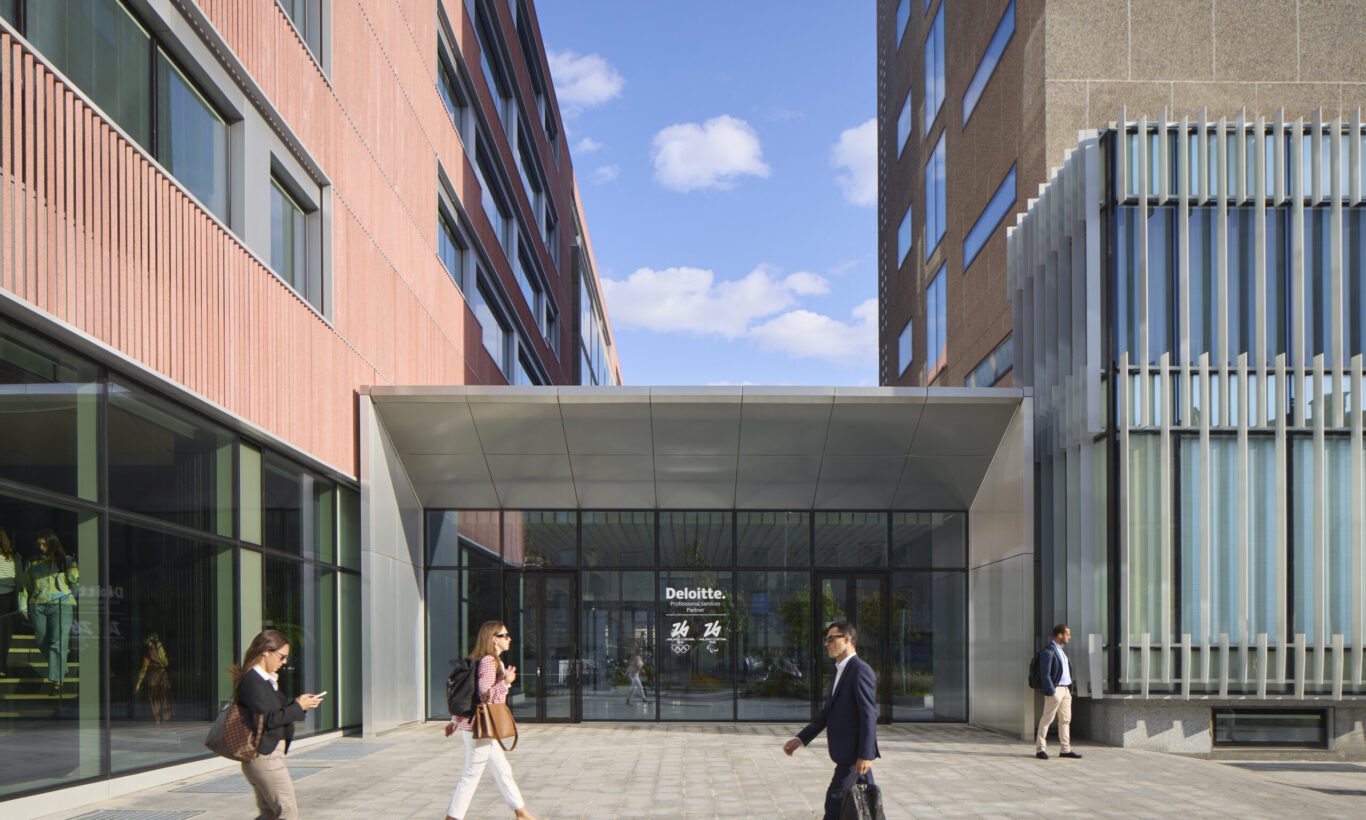
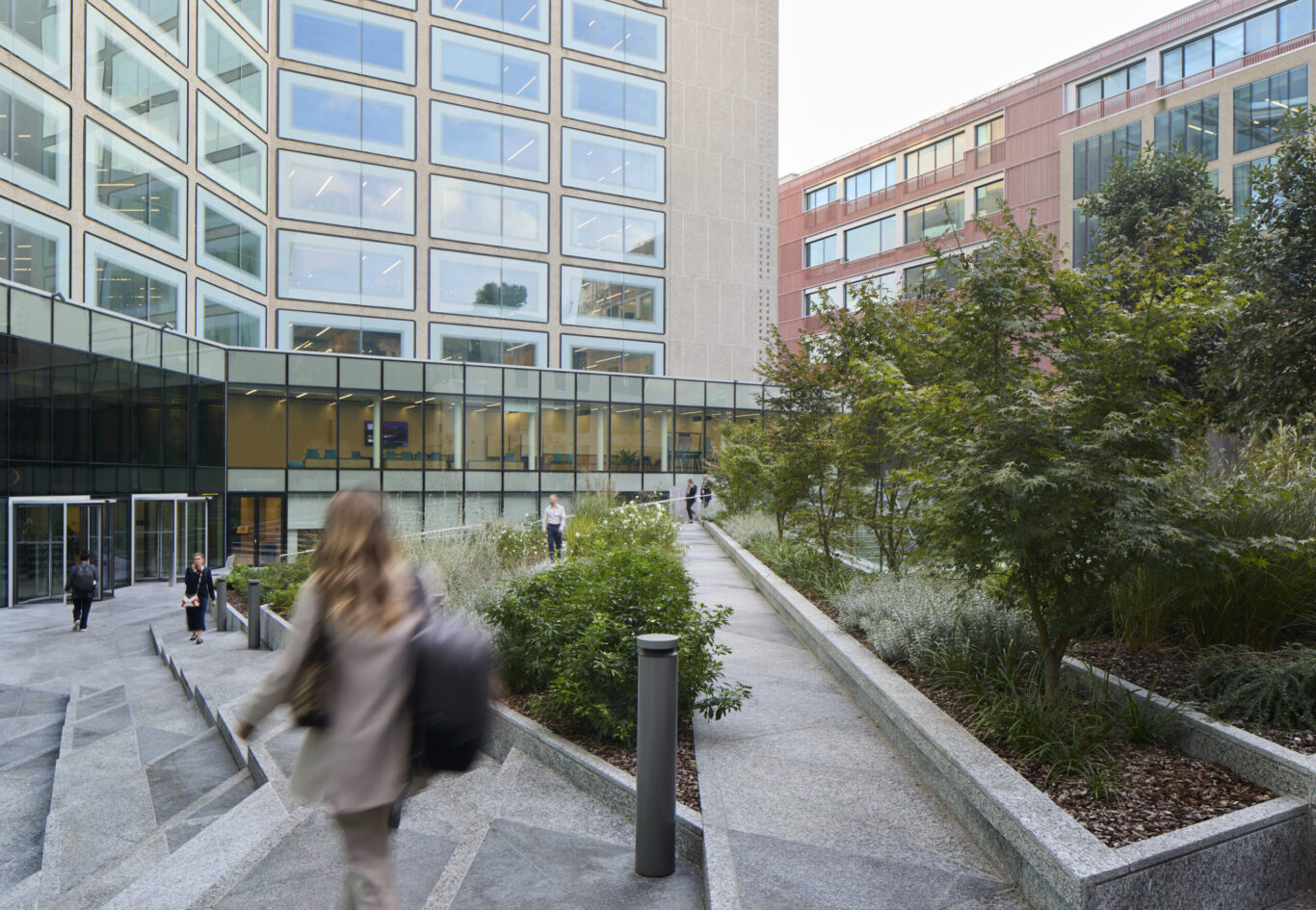
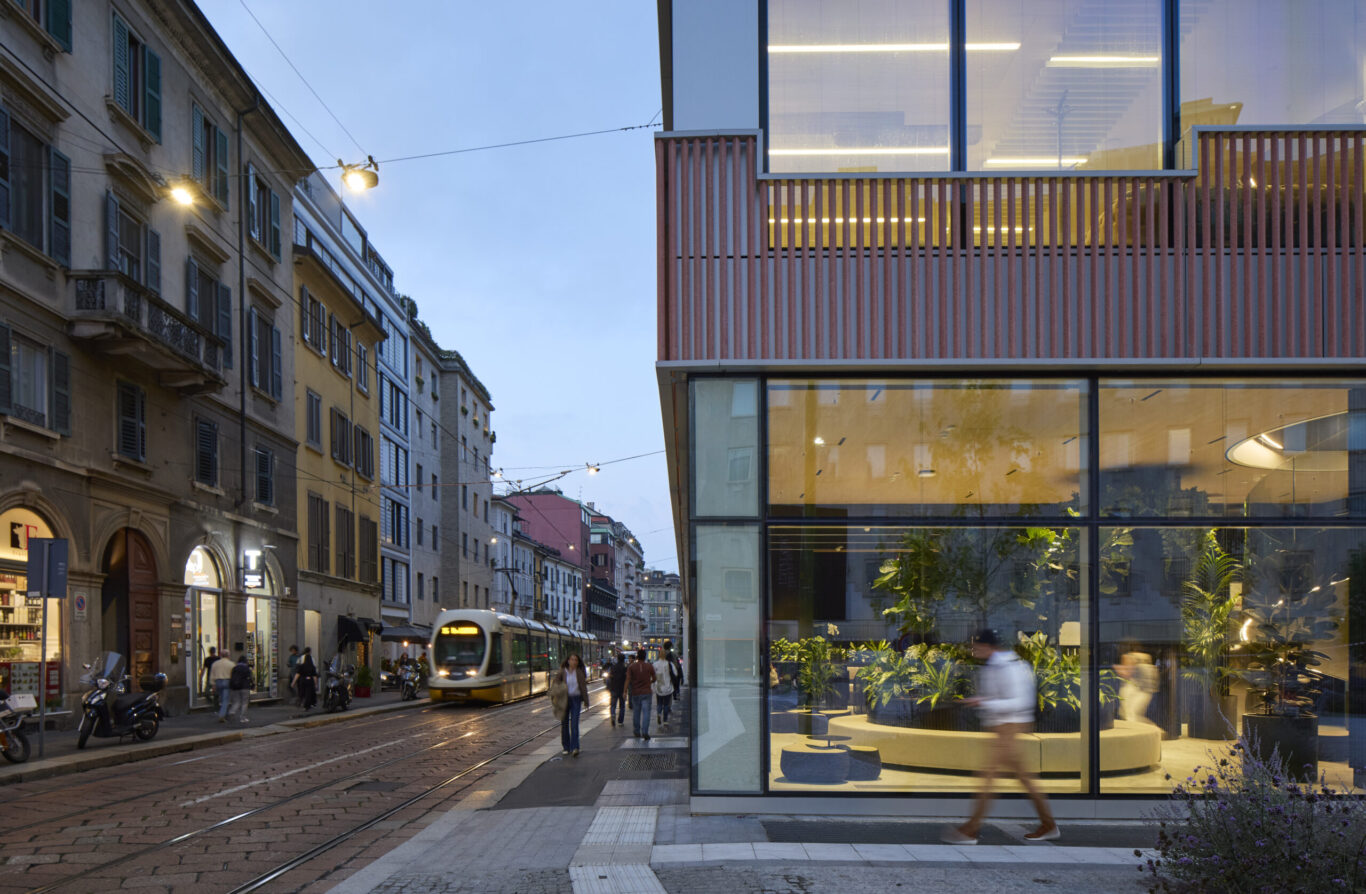
Taking an innovative approach to retrofit and renovation, SOM sought to preserve the spirit of the original architecture while radically transforming the buildings from within. The design team rediscovered Gio Ponti’s intention to create a sense of connection with the city and within the complex, creating new links within the buildings. The large interior courtyard, previously used for vehicle access and parking, has now become a central garden that unifies the entire campus. With plantings and seating areas, the courtyard is connected to a network of amenities for building tenants. New, glass-enclosed entrance lobbies offer views into the garden courtyard, giving the formerly insular complex a new sense of permeability.

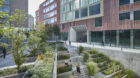
Dave Burk © SOM
Dave Burk © SOM

A human-centered, amenity-rich workplace

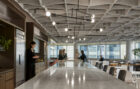
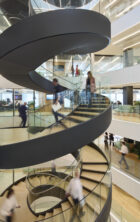
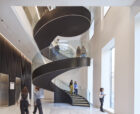
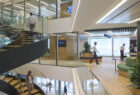
Our renovation honors the original architects’ vision while addressing the needs of the contemporary workplace. New openings in the floorplates accommodate dramatic spiral staircases, creating physical and visual connections between floors. Central hub spaces connect the office floors vertically, offering tenants a range of common areas.

Dave Burk © SOM
Dave Burk © SOM

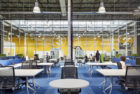
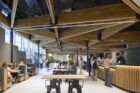
Various work settings, as well, offer choice and versatility. In addition to traditional desks, lounges and breakout spaces provide opportunities for informal gatherings and collaboration, while quieter areas equipped with soundproof booths support focused individual work. The workplaces are complemented by state-of-the-art amenities, including a conference center with a 200-seat auditorium. Additions to the roof offer further amenities including executive office terraces and green spaces with inspiring views above Milan.

Dave Burk © SOM
Dave Burk © SOM

Responding to heritage and sustainability

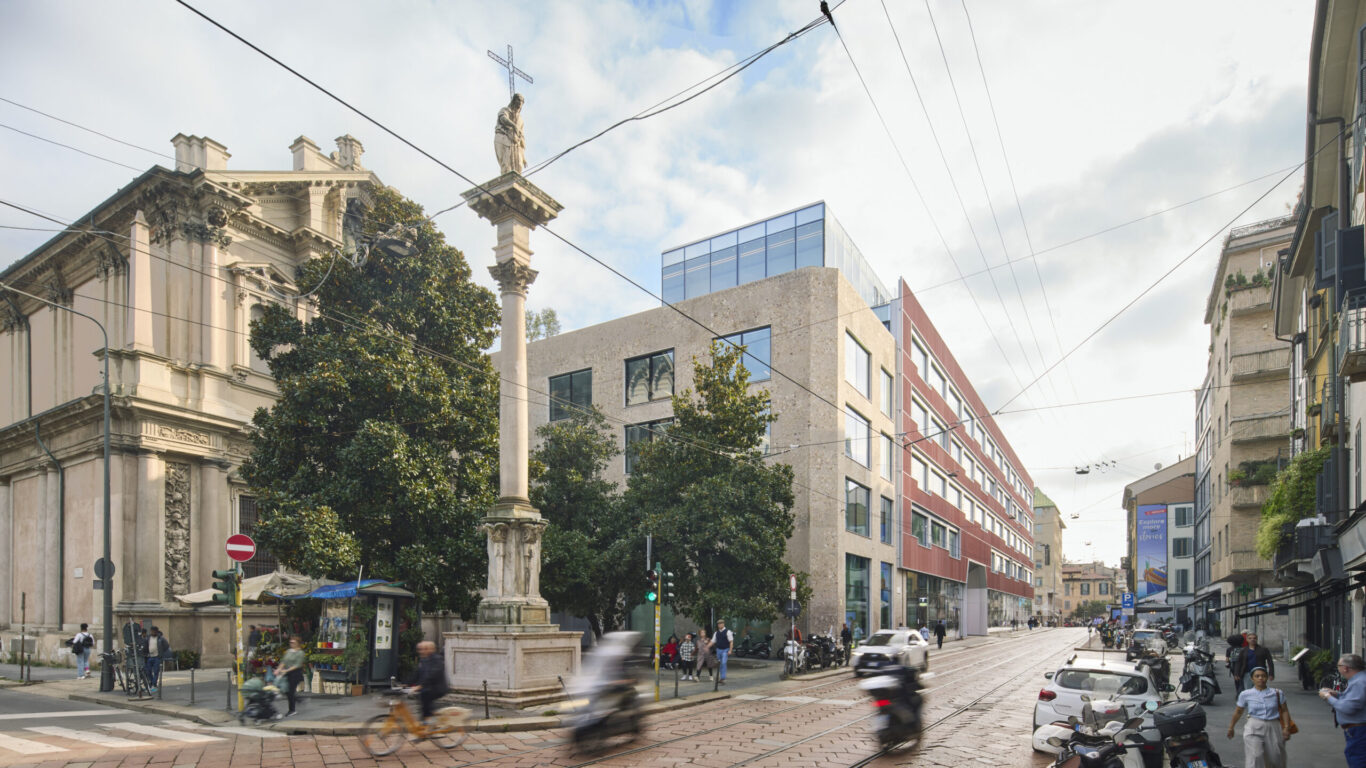
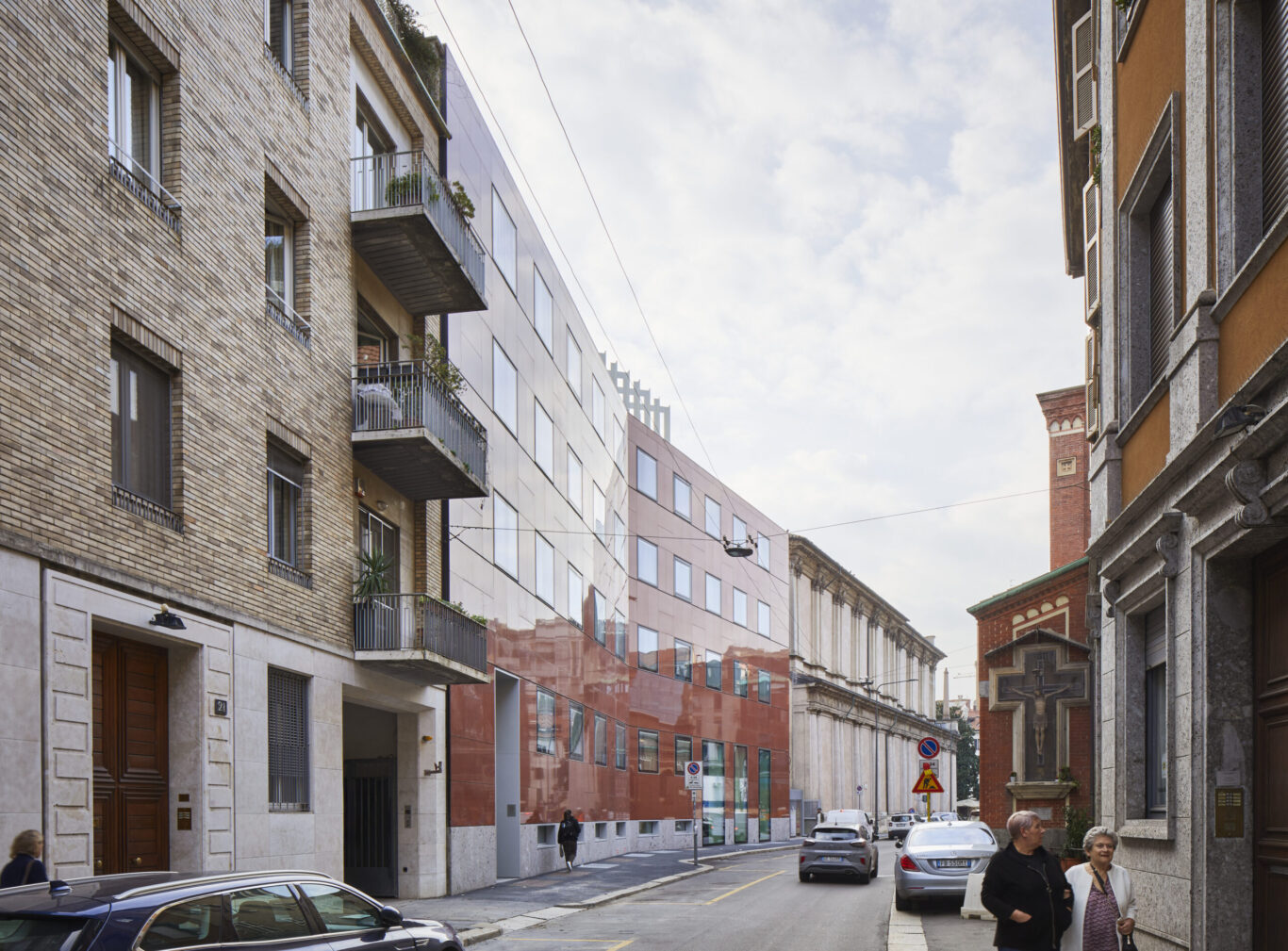
Together with our client, our team facilitated a collaborative design process involving sustainability specialists, structural and facade engineers, heritage consultants, and cost managers who worked together from concept through construction. This team engaged with local authorities and stakeholders to align design strategies with client objectives, regulatory requirements, and heritage considerations. The team worked closely with local heritage authorities from the early stages to navigate the complexity of the campus’s protected status and its proximity to historically significant buildings, including the churches of San Paolo Converso and Santa Eufemia. Each intervention was carefully planned to align with conservation requirements. Embracing all facets of sustainability—environment, well-being and digital connectivity—the project has achieved LEED Platinum, WELL Platinum, WiredScore Gold, and EPC A+ certifications. 

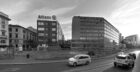
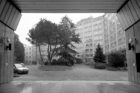
Pre-renovation view of Corso Italia and Via Santa Sofia. © Francesco Piazza
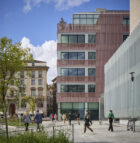
Post-renovation view of Corso Italia and Via Santa Sofia. Dave Burk © SOM
Pre-renovation view of courtyard. © Francesco Piazza
Post-renovation view of courtyard. Dave Burk © SOM

Recycling materials to reduce carbon

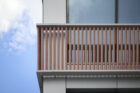
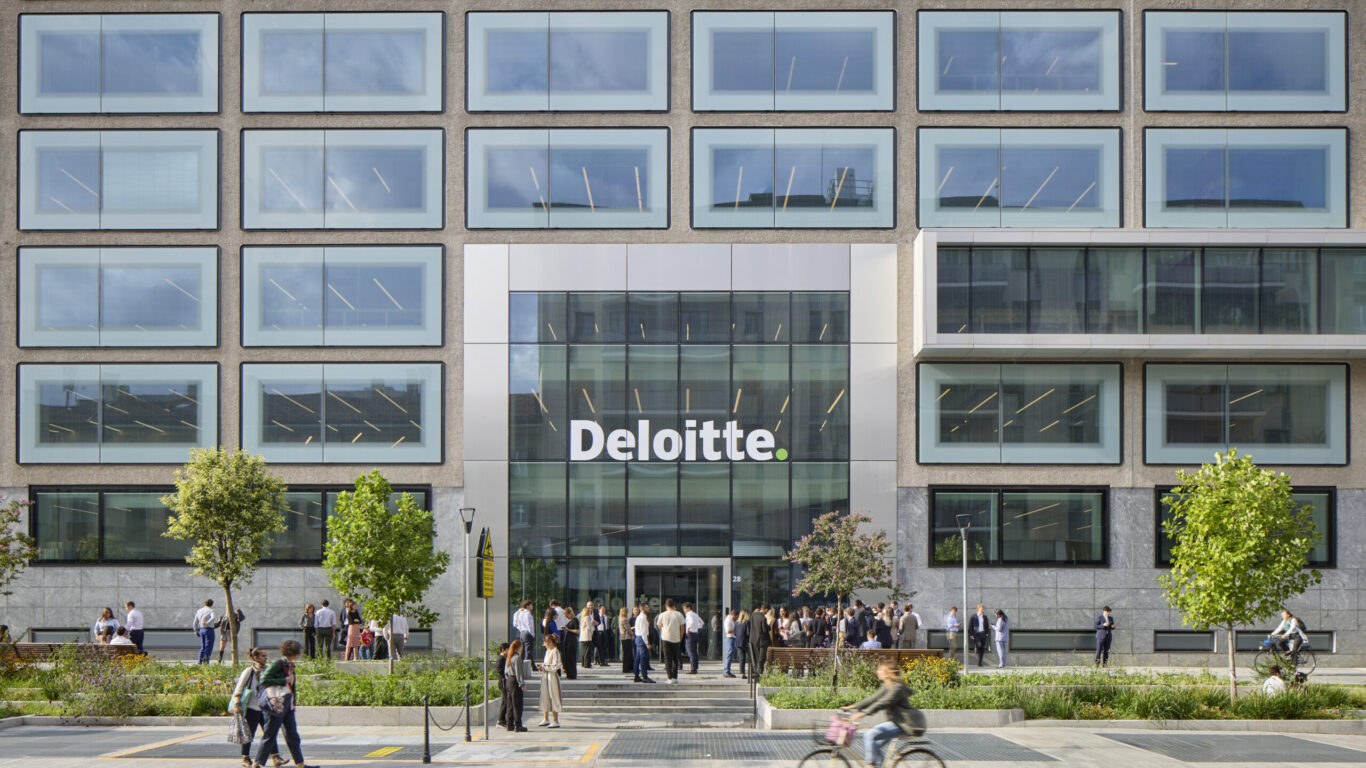
With a focus on preservation and upcycling, our strategy for the Corso Italia complex significantly reduced the embodied carbon impact of construction. 70 percent of the existing structure and foundations were preserved. Our team took an inventive approach in repurposing existing facade materials, including portions of original red granite which needed to be replaced due to damage and wear. The granite panels were carefully demounted, processed, and repurposed as aggregate in a new glass fiber reinforced concrete (GFRC) facade system. Composed of 40 percent upcycled granite, the GFRC facade maintains the distinctive hue and texture of the original material, while giving the building a subtly new expression. The recycling strategy resulted in 150 cubic meters of waste being diverted from landfill, reducing the embodied carbon impact of renovation.

Dave Burk © SOM
Dave Burk © SOM

Energizing a district, enhancing the public realm

The project coincides with a milestone in Milan’s urban development: it fronts the newly opened Santa Sofia station on the M4 line, which links the city center with the airport in 20 minutes. SOM’s design realizes a historic opportunity to reinvigorate the Corso Italia area as a newly vibrant workplace district. The renovation contributes to a city that honors the past while continually reinventing itself for the future. Just as Gio Ponti and his collaborators revolutionized workplace architecture with their original project, we hope that our sensitive transformation sets a new benchmark for offices and their role in cities.

More Projects

01/