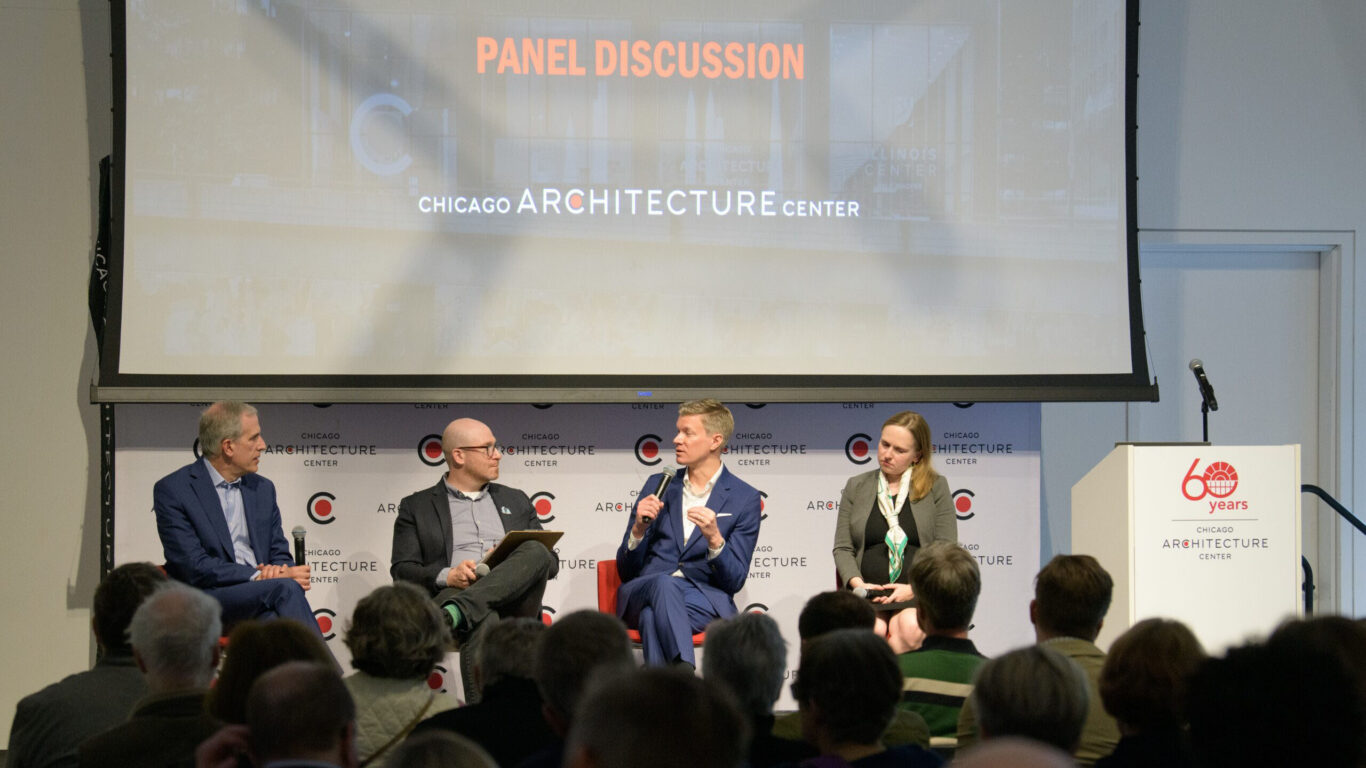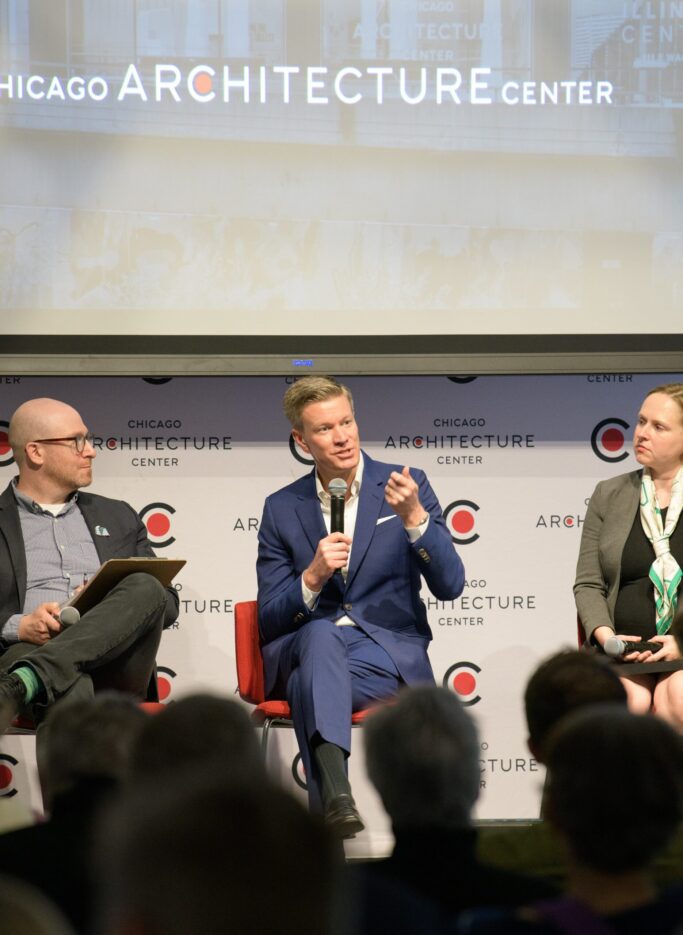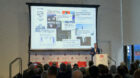
SOM Design Principal and Adaptive Reuse Practice Leader Frank Mahan joined the Chicago Architecture Center for “New Paths to Preservation: The Late Modern Dilemma,” a panel discussion exploring how cities can adapt 20th-century buildings to meet today’s housing, climate, and growth challenges.
Held during Preservation Month, the conversation brought together leaders in architecture, advocacy, preservation, and public policy, including Kendra Parzen, Advocacy Manager at Landmarks Illinois; Adam Rubin, CAC Senior Director of Public Engagement and a Chicago landmarks commissioner; and Ken Bernstein, who leads the Office of Historic Resources for the City of Los Angeles.
The discussion focused on the growing urgency of reusing underutilized office buildings, particularly late modern towers that are becoming increasingly difficult to adapt to contemporary needs. Panelists examined the evolving role of landmark designation, adaptive reuse incentives, office-to-residential conversions, embodied carbon, and the challenge of evaluating buildings whose significance may be urbanistic, technological, or cultural rather than purely ornamental.
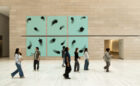
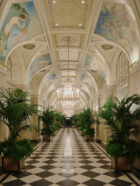
Mahan shared insights from SOM’s adaptive reuse work in New York and beyond, including the transformation of the Waldorf Astoria, the long-term stewardship of Lever House, and new studies for converting large mid-century and postmodern office buildings into mixed-use residential environments. His presentation highlighted how successful reuse must go beyond cosmetic upgrades to rethink building performance, public access, outdoor space, and neighborhood vitality.
The panel was framed around recent debates in Chicago, including the landmark designation of 30 North LaSalle and broader efforts to revitalize the Loop through office-to-residential conversion. Speakers also drew connections to Los Angeles’ adaptive reuse policies and Lower Manhattan’s residential transformation, considering what lessons cities can learn as they reimagine downtowns for the decades ahead.