Project
Smithsonian National Museum of American History Renovation
Washington, District of Columbia, United States
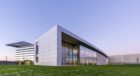
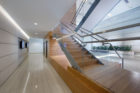
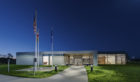
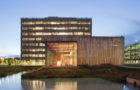
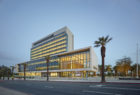
This elegant low-rise building presents a modern public face for the government agency while providing carefully designed spaces for its critical operational infrastructure.
The Social Security Administration (SSA) serves millions of Americans, delivering monthly benefits to people of all ages and backgrounds. To continue supporting this essential function well into the future, the SSA needed a new home for its primary data center. SOM’s design for the agency’s National Support Center, set on 63 acres outside Washington D.C., elegantly achieves stringent sustainability and security criteria
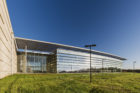
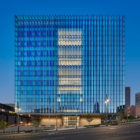
Constructed of glass, aluminum, and precast concrete, the two-story office building provides a welcoming environment for visitors and staff. A curving, dual-winged data center houses critical back-of-house operational infrastructure. Five acres of the site were reforested, while the entire site features native grasses and vegetation. Vital resource preservation elements were utilized, including low-irrigation meadows, photovoltaic panels that generate approximately one megawatt of electricity, and a rainwater harvesting and filtration system.
An innovative design-build arrangement streamlined design and construction. An enhanced Building Information Modeling (BIM) delivery process, including real-time 3D modeling, minimized costs and compressed the project timeline. The resulting cost-effective, energy-saving facility provides a secure home for data operations, allowing the SSA to fulfill its obligations to current and future generations of beneficiaries.
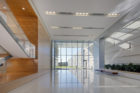
The SSA National Support Center anticipates future technological advancements that will promote the expansion and quality of its services. The facility complies with Mission Critical Criteria from the Uptime Institute Tier 3 design certification standards and contains the infrastructure necessary to support an IT load of six Megawatts (MW), expandable to 10 MW.
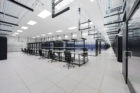
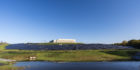
The mechanical and electrical systems required to support data centers typically represent a significant contributor to energy consumption. However, the systems for the NSC are designed to achieve energy reduction goals, while still providing a robust, reliable, and expandable infrastructure. The facility achieves energy efficiency through advanced building control systems, climatically responsive layouts, waste reduction, natural day lighting, and solar control—both through the building’s orientation and with solar control devices. Additional efficiency measures include a one MW fixed-tilt photovoltaic ground mounted array. A rainwater cistern recaptures storm water and assists with cooling, providing non-potable water throughout the building.
Washington, District of Columbia, United States
01/