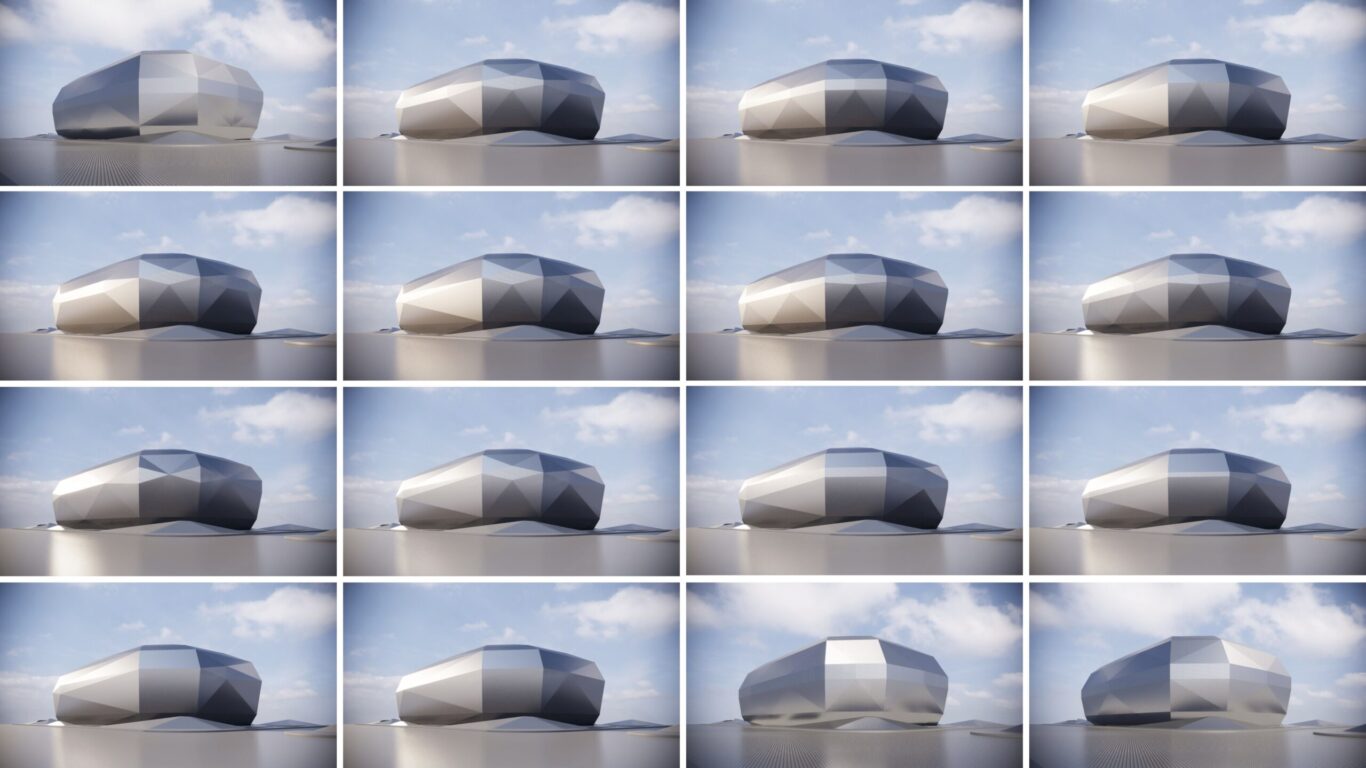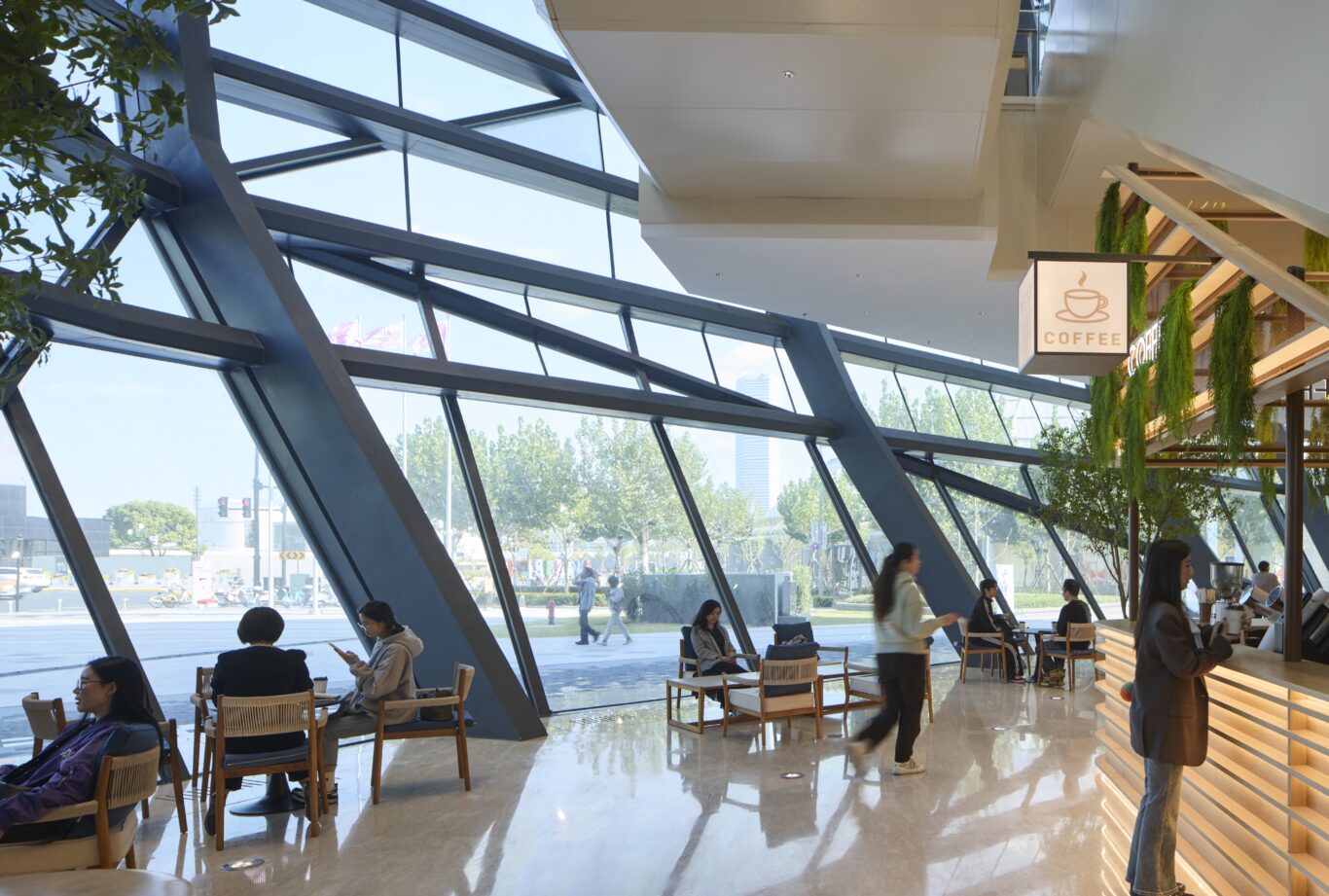
In a feature for CNN Style, Oscar Holland describes SOM’s West Bund Convention Center as a building “neither rooted in nature nor even entirely designed by humans,” highlighting the role of AI in shaping this landmark project in Shanghai.
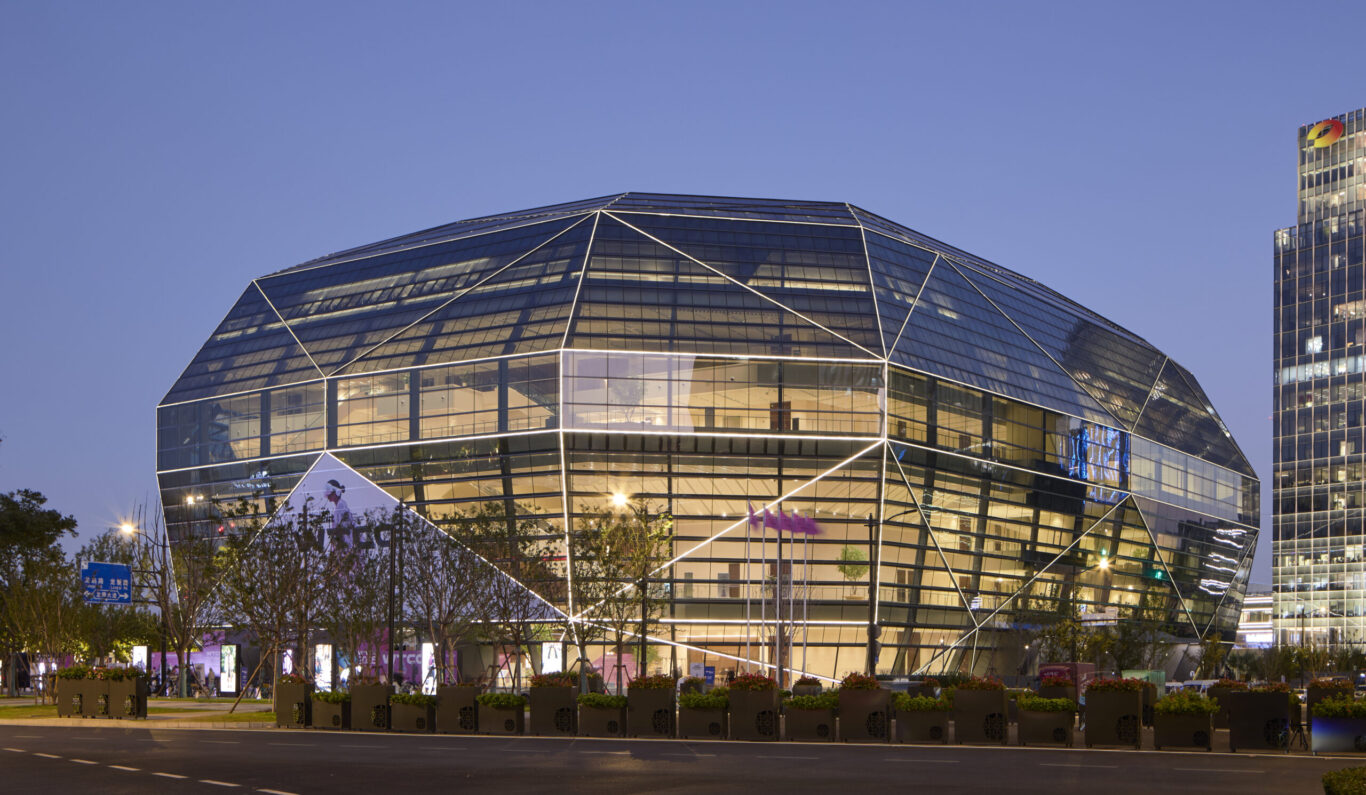
Located along the Huangpu River in the city’s West Bund district, an area rapidly transforming into a hub for China’s artificial intelligence industry, the convention center serves as the permanent home of the World Artificial Intelligence Conference. Its sculptural, diamond-shaped form emerged from a custom AI-assisted workflow developed by SOM. The design approach was built to optimize performance, constructibility, and user experience.
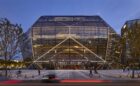
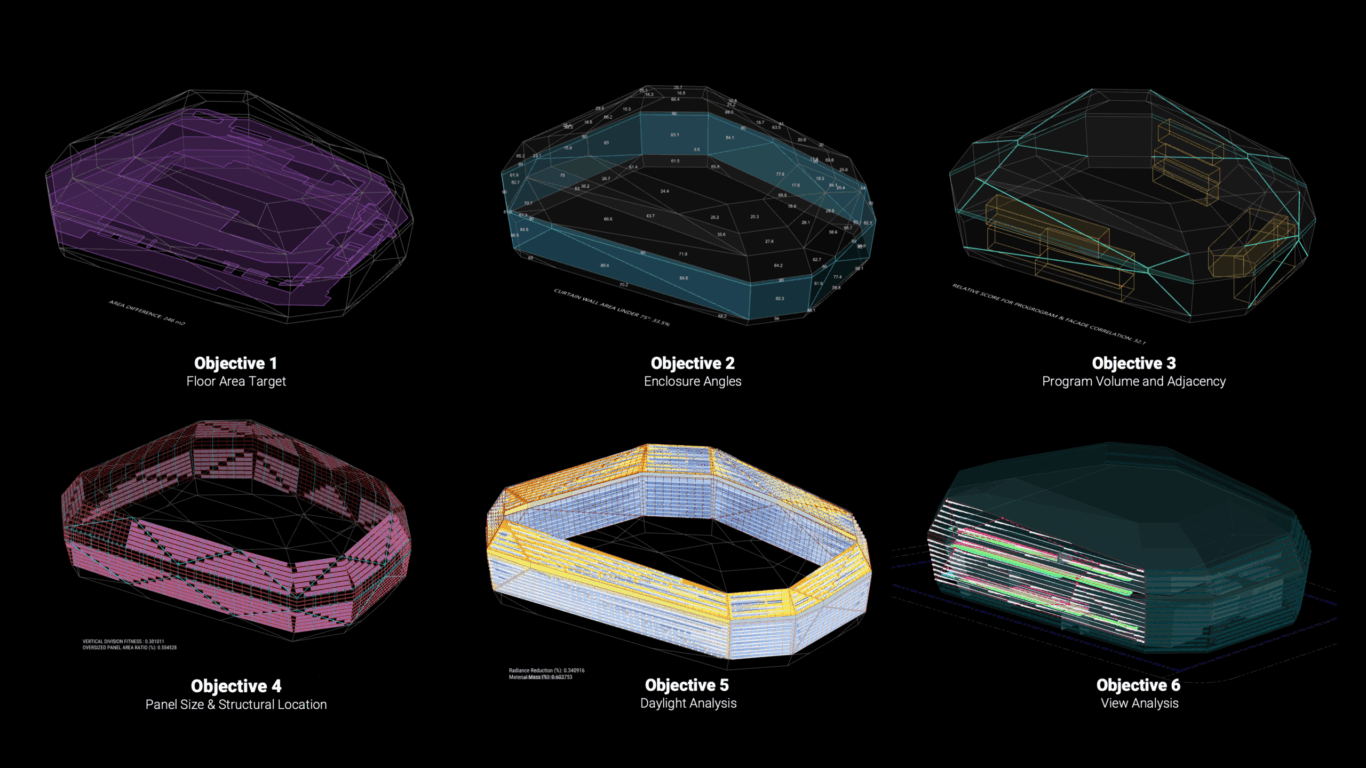
“We had the vision to actually use artificial intelligence as a primary driver for the expression of the building,” said Design Partner Scott Duncan. Using a multi-objective optimization process, the design team defined a complex set of constraints, including site dimensions, daylight access, structural efficiency, floor area, and façade geometry. The AI system generated and analyzed more than 800 design variants, each evaluated against competing objectives.
“It’s like algebra,” Duncan explained. “You have multiple equations and multiple unknowns, and you can solve for them all at once.” The resulting form—a crystalline glass volume that gleams by day and fades to black at night—balances performance with precision. The AI process also accelerated the design timeline by weeks, reduced material use, and improved constructibility through geometric efficiency.
Yet human input remained central. “The algorithm doesn’t know what beauty is,” Duncan said. “The violin doesn’t play itself.” The design team made the final selection based on architectural intent and contextual fit.
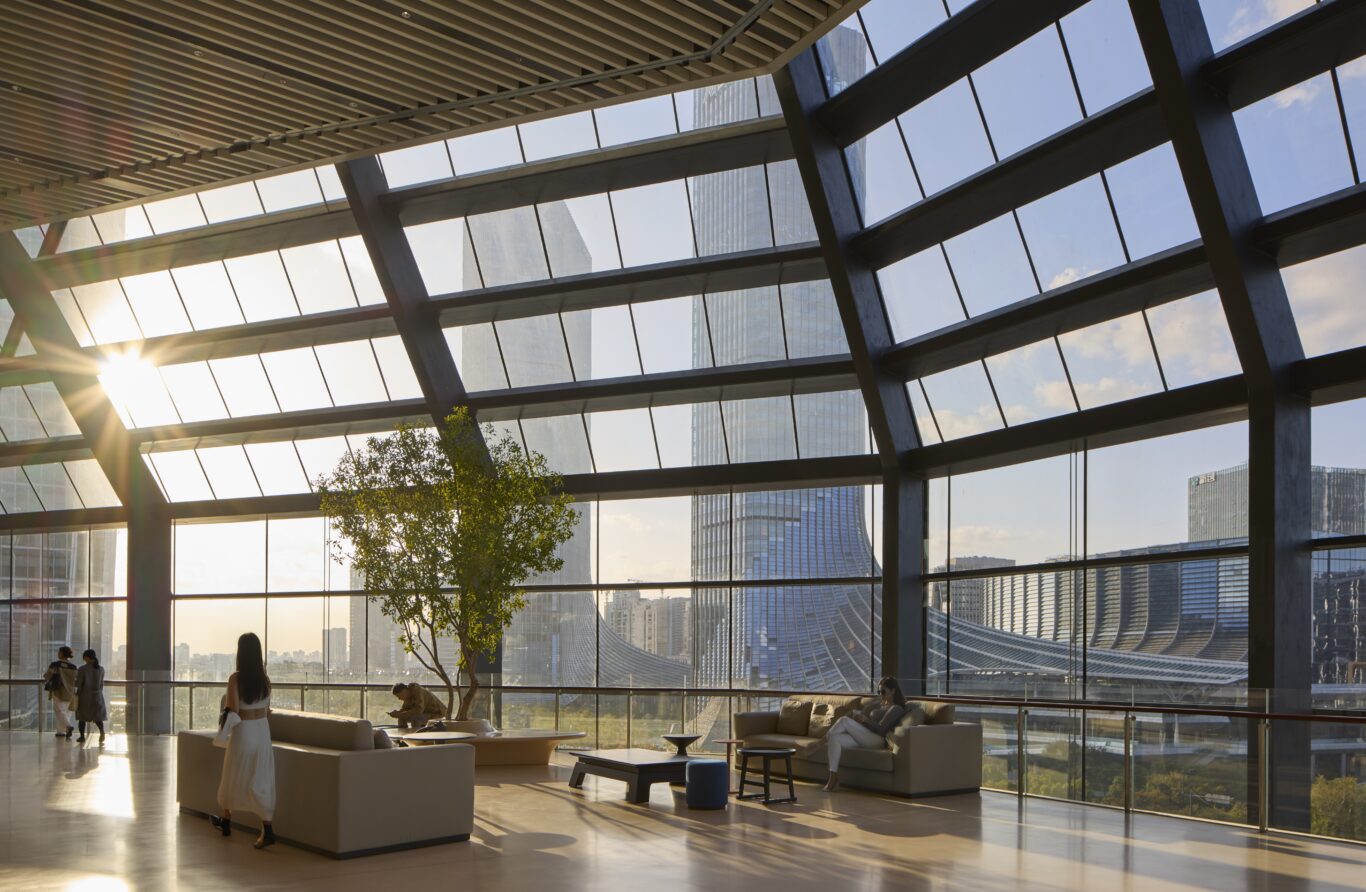
The center features a grand atrium, two multifunctional exhibition halls, rooftop terraces, and a landscaped public realm that connects to Shanghai’s waterfront corridor. As CNN Style underscores, the project reflects how emerging technologies are advancing the possibilities of architectural design, allowing architects to drive their vision with greater clarity, speed, and complexity.