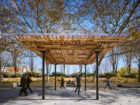
Tapping into an often overlooked reserve of existing building materials, the installation demonstrates how material reuse and innovative structural design can offer a scalable, low-carbon alternative to conventional construction
CHICAGO, IL—A new timber pavilion made from reclaimed wood has opened in Chicago’s Millennium Park as part of the 2025 Chicago Architecture Biennial.
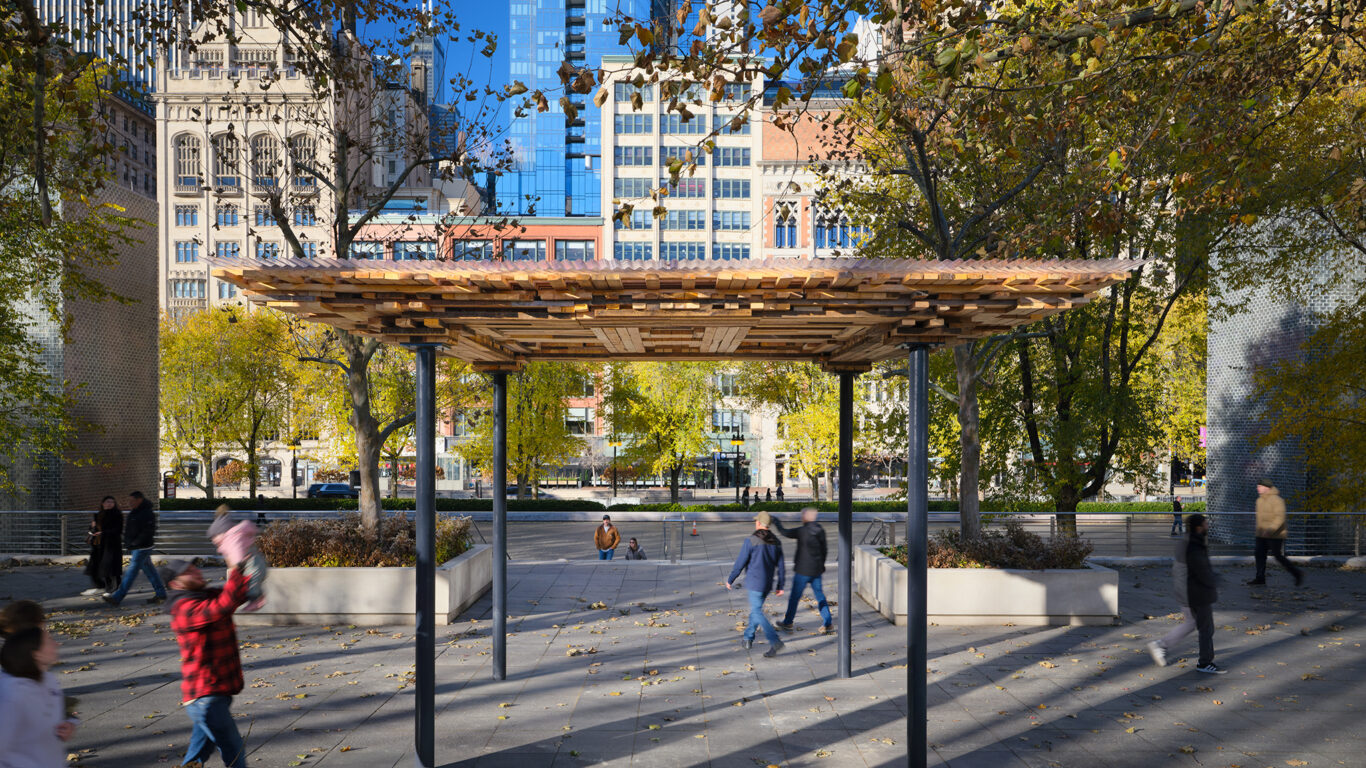
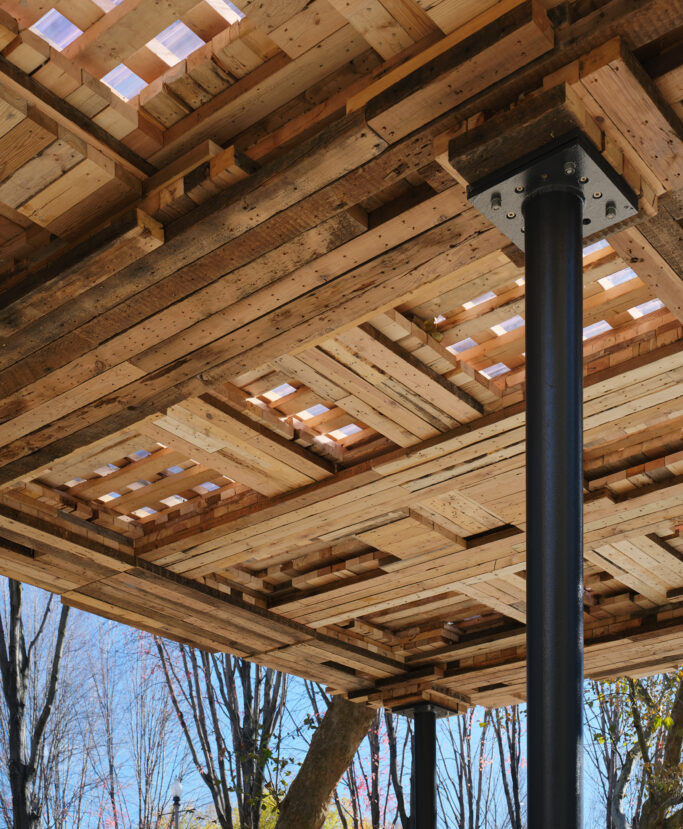
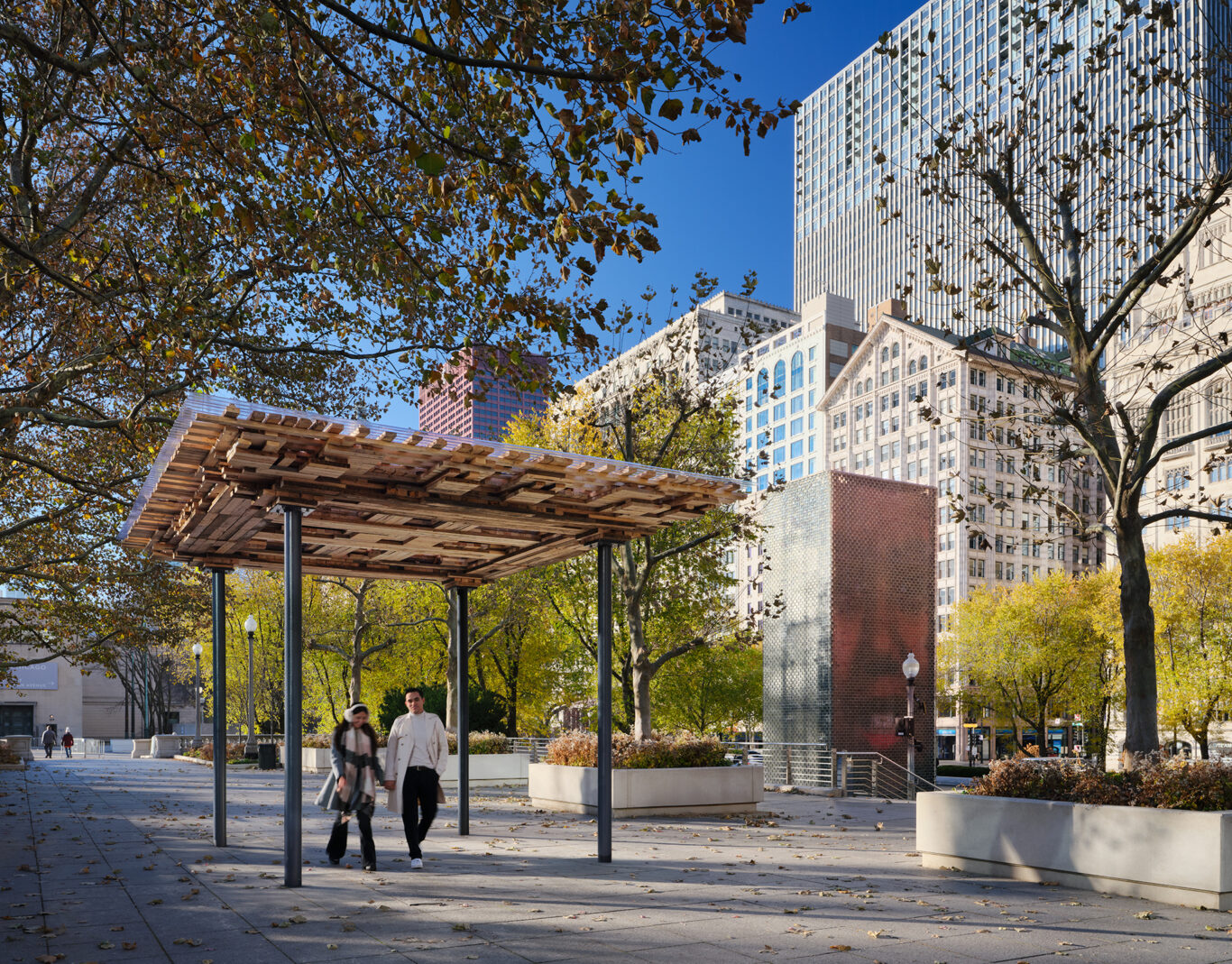
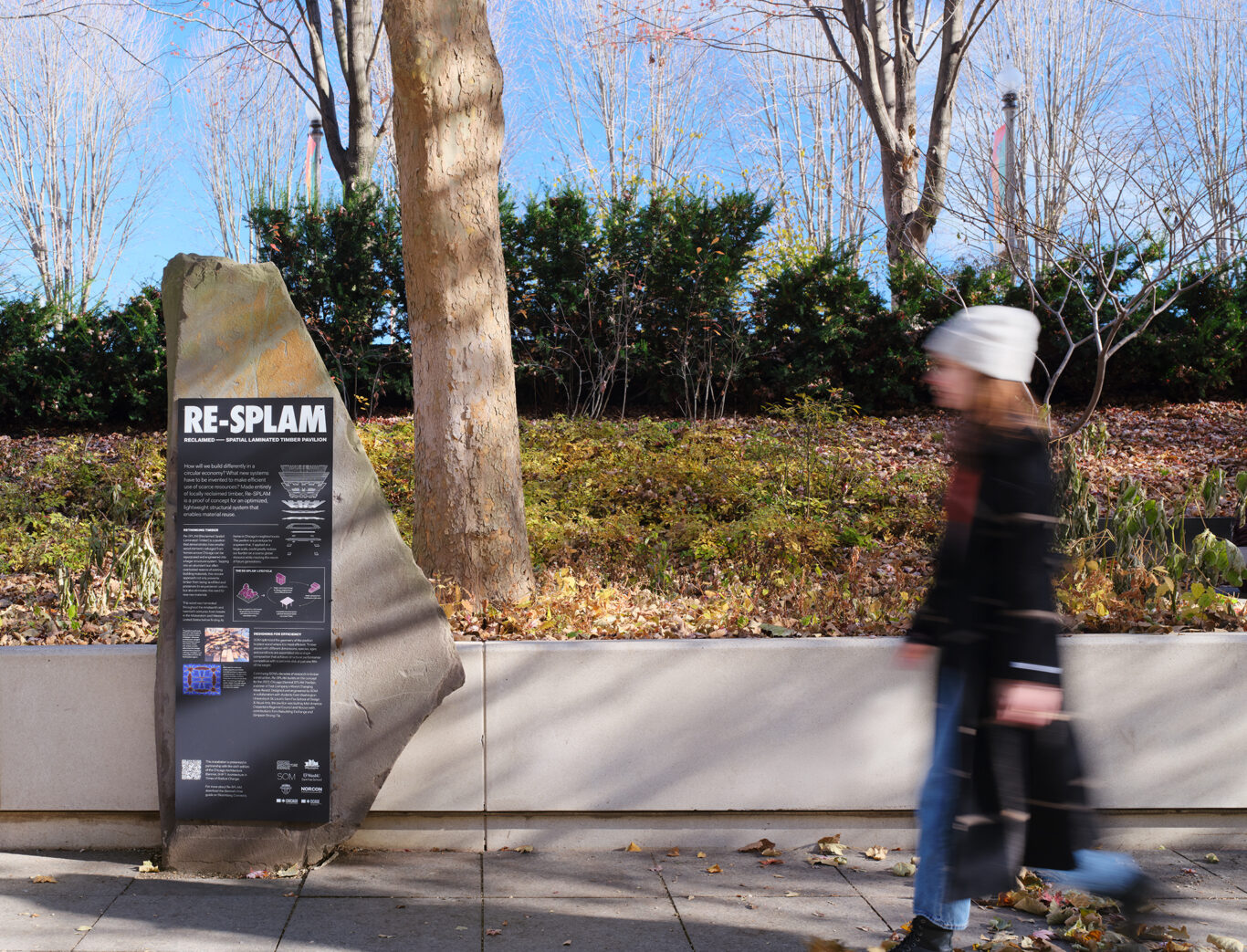
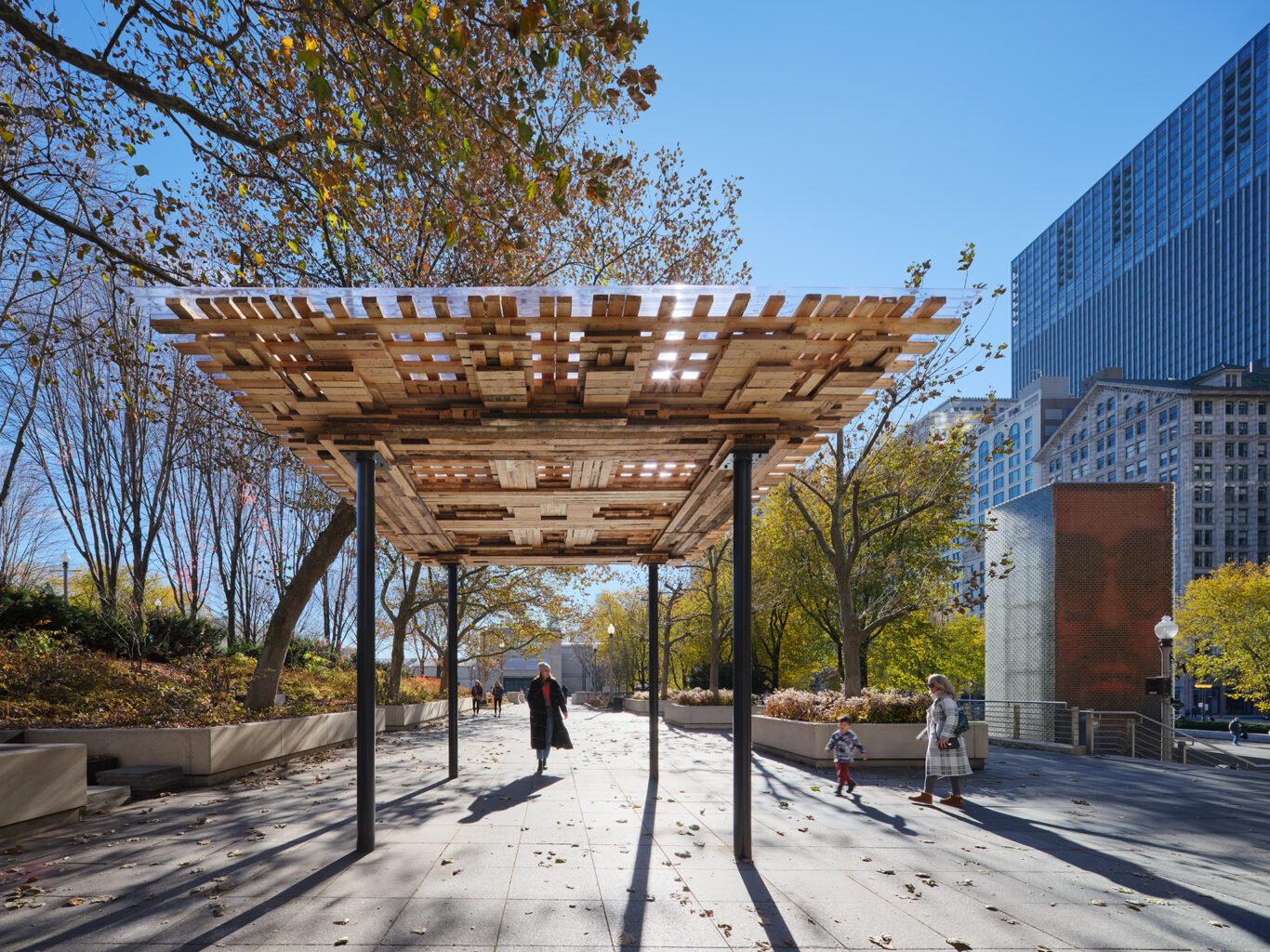
Designed and engineered by Skidmore, Owings & Merrill (SOM), Re-SPLAM [Reclaimed Spatial Laminated Timber] expands on the firm’s 2021 installation at the Chicago Architecture Biennial. The pavilion extends SOM’s research in sustainable materials and structural efficiency to encompass circular economy principles by constructing a new framework for building with timber salvaged from homes across Chicago. On view in South Boeing Gallery through February 28, 2026, the 16-by-20-foot caznopy serves as a proof of concept for a structural system made entirely from upcycled wood; its optimized structural design delivers the performance of conventional reinforced concrete slabs at just one-fifth the weight.
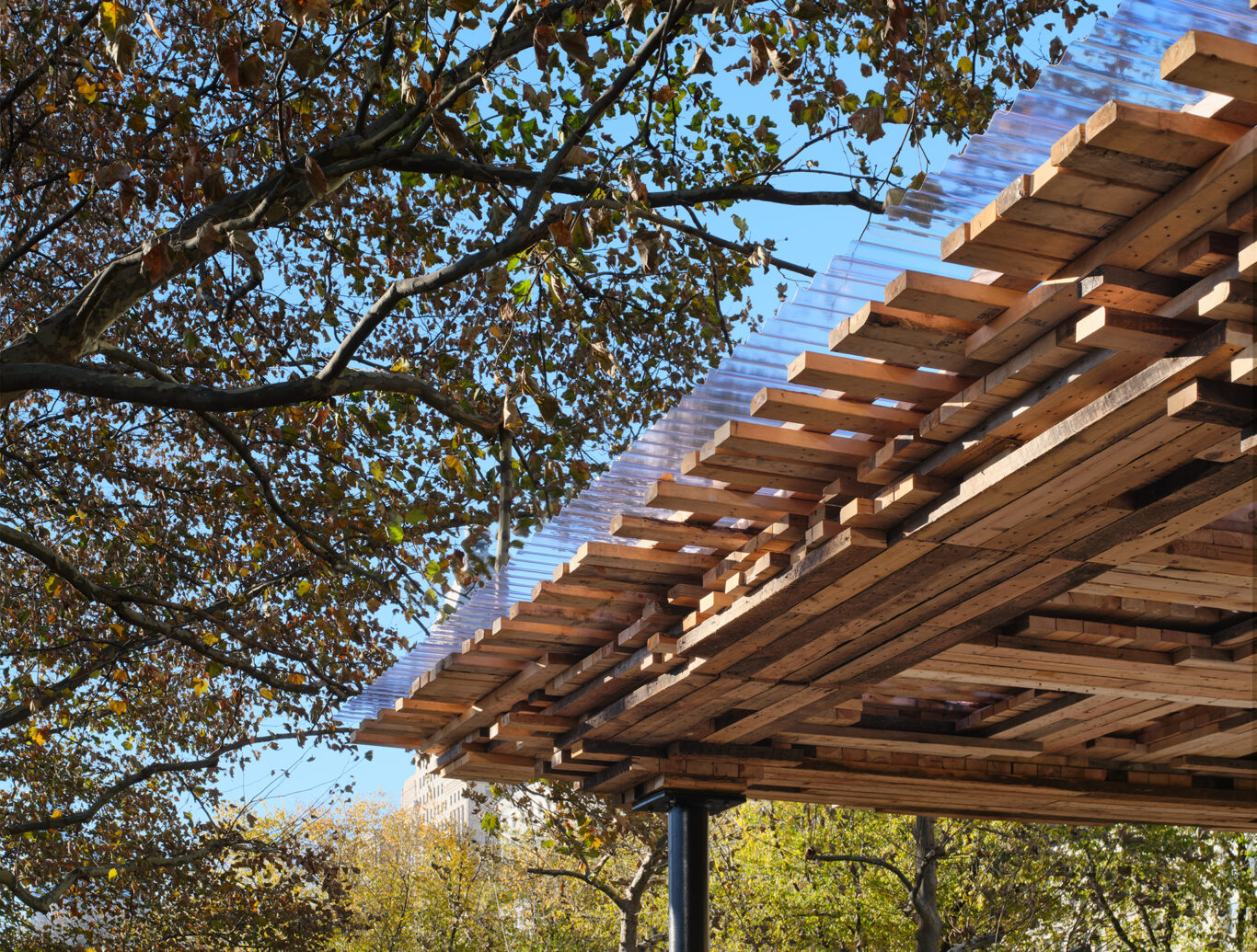
“Re-SPLAM challenges the assumption that salvaged wood is fit only for decoration or disposal,” said SOM Design Partner Scott Duncan, “and offers a structurally viable alternative that rivals conventional concrete systems. By stacking readily available two-by-four framing of various ages and species into a three-dimensional canopy, we’re demonstrating how innovative design and engineering can extend the life of these materials while conserving their carbon-sequestering benefits.”
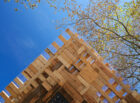
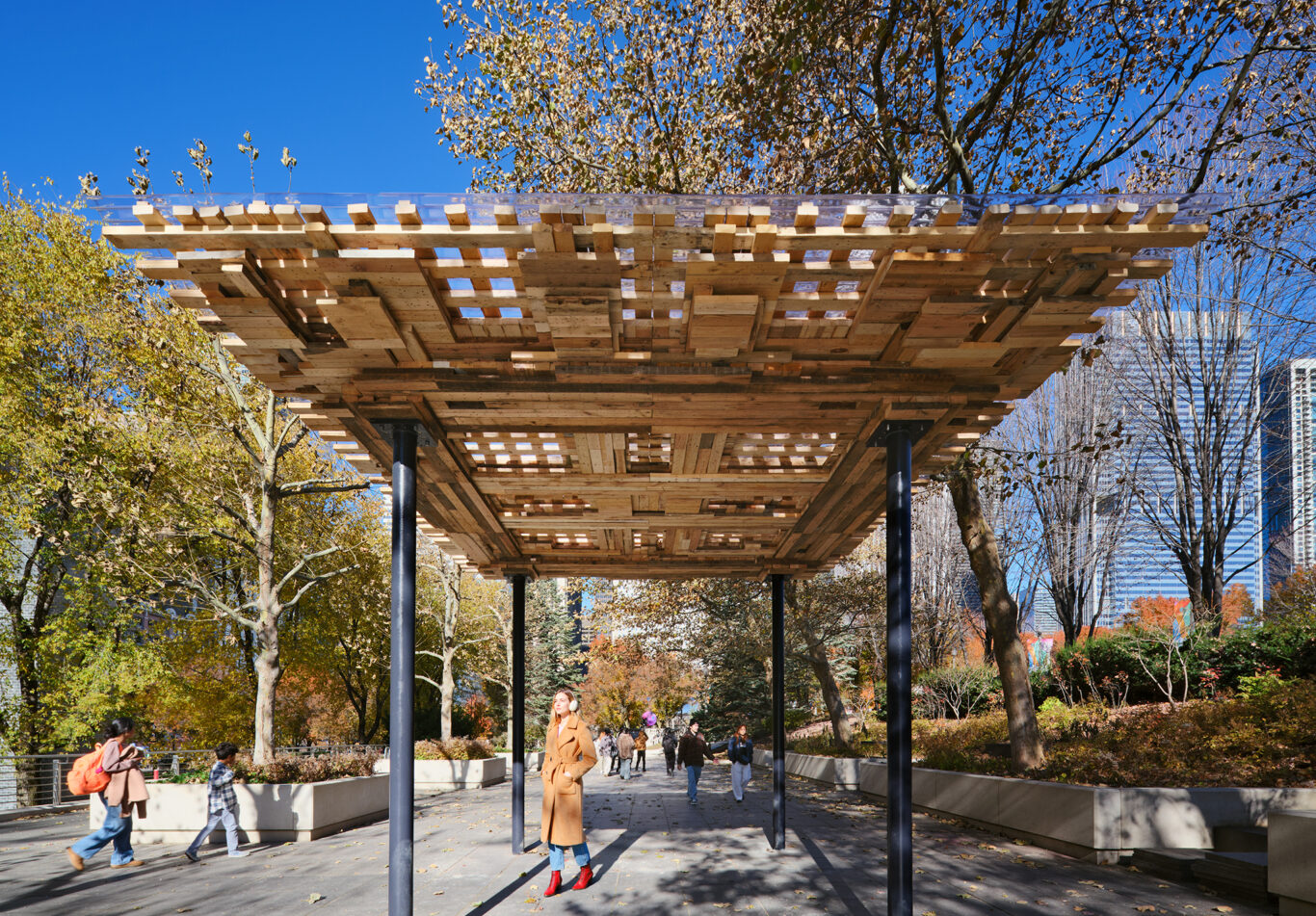
As part of SOM’s ongoing research into sustainable timber systems, the first SPLAM pavilion explored a lightweight alternative to traditional cross-laminated timber, reducing material use by 46 percent while using smaller, more readily available wood elements. Re-SPLAM builds on that work by using exclusively reclaimed two-by-four planks—each with unique imperfections and varying degrees of structural integrity—illustrating how material variability can be embraced through thoughtful design. Tapping into an often overlooked reserve of existing building materials, the project exemplifies a circular approach to construction, where reuse is not only possible, but a competitive alternative to new materials. This system, if applied at a large scale, could greatly reduce our burden on a scarce global resource while meeting the needs of future generations.
Reflecting on how the installation embodies this year’s curatorial theme, Biennial Artistic Director Florencia Rodriguez said, “It captures the essence of SHIFT: Architecture in Times of Radical Change by showing how reclaimed materials can drive new spatial and structural possibilities. SOM’s installation demonstrates how rethinking what we already have can open pathways to more responsible and imaginative forms of architecture.”
Developed in collaboration with students from Washington University in St. Louis’ Sam Fox School of Design & Visual Arts and constructed by the Mid-America Carpenters Regional Council and Norcon using materials donated by the Rebuilding Exchange and Simpson Strong-Tie, the installation showcases innovative structural design driven by computational tools. Each timber piece was measured and cataloged to determine its optimal placement based not only on its condition and material properties, but also to minimize cutting and material waste—dramatically reducing the assembly’s overall weight. The resulting assembly gives new purpose to salvaged wood typically destined for disposal or low-grade reuse such as mulch, extending its lifespan and preserving its sequestered carbon.
Located in Millennium Park, the pavilion also serves as a public demonstration of advanced research in material science and design. Positioned near celebrated works such as Jaume Plensa’s Crown Fountain, the installation is a continuation of SOM’s long-standing relationship with the park—having led its original master plan. The timber structure is set atop four columns, creating a 320-square-foot gathering space defined by the rhythm and texture of the layered wood canopy overhead.
“As we mark the Biennial’s tenth year, Re-SPLAM exemplifies the kind of innovative work that has defined our legacy from the beginning,” said Biennial Co-Chair and Director of the Graham Foundation Sarah Herda. “SOM continues the Biennial’s tradition of showcasing design innovation that can meaningfully shape the future of architecture.”
More broadly, Re-SPLAM seeks to spark dialogue about the role of circularity in commercial construction and what it means to introduce reclaimed materials at scale. By demonstrating how smaller wood elements salvaged from a single home can be engineered into a larger structural system, the project challenges long-held industry assumptions and points toward a future in which carbon-intensive materials give way to adaptive, circular solutions shaped by both local contexts and global climate imperatives. In line with the 2025 Biennial’s theme, Shift: Architecture in Times of Radical Change, the installation offers a material and design response to urgent questions about sustainability, resilience, and the evolving responsibilities of architecture in addressing climate change.
About the Chicago Architecture Biennial (CAB)
The Chicago Architecture Biennial convenes the world to explore innovative ideas and collectively imagine the future of design. The Biennial’s large-scale exhibitions, talks, performances, films, and other events, create opportunities to engage timely global issues through the lens of architecture and design, emphasizing creativity and community participation. Free and open to the public, the Chicago Architecture Biennial stands as North America’s largest international survey of contemporary architecture and design.
Since 2015, the Chicago Architecture Biennial has produced five editions that featured more than 400 projects from 40 countries and welcomed over 2.2 million visitors to exhibitions and public programs across Chicago. From Sullivan and Wright to today’s most daring spatial thinkers, the Biennial reaffirms Chicago’s role as a crucible for radical ideas and inclusive design.
Learn more at chicagoarchitecturebiennial.org.
About Skidmore, Owings & Merrill (SOM)
Skidmore, Owings & Merrill (SOM) is an interdisciplinary design firm with an unmatched legacy of innovative projects that have made a lasting impact in cities and communities around the world. Working across a global network of design studios, our architects, engineers, designers, and urban planners combine their expertise to create buildings and urban spaces that are transformative and enduring. Through our built work, research initiatives, and our role as advocates in our industry and beyond, we are advancing strategies to decarbonize the built environment. SOM is a net zero carbon business. Previous installations for the Chicago Architecture Biennial have explored the next frontier of material innovation in construction, including the Stereoform Slab in 2019, the SPLAM Timber Pavilion in 2021, and the Bio-Block Spiral in 2023.
About the Sam Fox School of Design & Visual Arts at Washington University in St. Louis
The Sam Fox School of Design & Visual Arts is a leader in architecture, art, and design education, advancing these fields through innovative research and creative practice, excellence in teaching, a world-class university art museum, and a deep commitment to addressing the social and environmental challenges of our time. The Sam Fox School encompasses four academic units — the College of Architecture, Graduate School of Architecture & Urban Design, College of Art, and Graduate School of Art — and the Mildred Lane Kemper Art Museum, each with its own unique history. The school offers 15 unique degree programs for both graduate and undergraduate students, supplemented by a number of creative research centers, including Island Press and the Office for Socially Engaged Practice.