
In “Rise of the Supertalls,” an episode of National Geographic’s six-part series Engineering by Catastrophe, the story of the modern skyscraper is told through the lessons that have shaped its evolution—from early towers and landmark failures to the supertalls redefining skylines today. The episode, which recently debuted in the UK, features SOM Partners Scott Duncan, Ken Lewis, Bill Baker, and Eric Long, who share their expertise in tall building design, structural engineering, resilience, and the innovations that continue to advance the field.
Drawing on SOM’s work on projects including One World Trade Center and Burj Khalifa, as well as the firm’s post-earthquake assessment work in Mexico City, the episode explores some of the most urgent questions in contemporary skyscraper design: how buildings can support safer evacuation, how façades and enclosures are tested against extreme weather, how structural systems respond to wind and seismic forces, and how lessons from past disasters can lead to new methods, tools, and technologies.
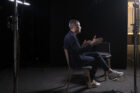
Scott Duncan
Scott Duncan traces the early forces that drove vertical development in New York, the enduring power of buildings like the Chrysler Building and the Twin Towers, and the ways tall buildings become symbols of civic identity and ambition. He also addresses the technical demands of contemporary supertall design, from egress and wind performance to enclosure systems.
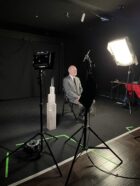
Bill Baker
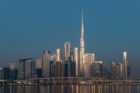
At the scale of a supertall, Bill Baker explains, a building is no longer just a vertical structure. It becomes a full-height system responding to forces from every direction. Baker focuses on wind, one of the defining forces in tall building design, and explains why engineers must understand a tower not as a collection of individual parts, but as one structure shaped by forces across its full height. The episode looks at vortex shedding and building sway before turning to Burj Khalifa, the world’s tallest tower, where SOM’s team refined the tower’s form, orientation, setbacks, tapering profile, and buttressed core through extensive wind testing.

Eric Long
Eric Long brings the discussion to Mexico City, where SOM engineers worked on the ground after the 2017 earthquake to assess damaged buildings and support recovery efforts. Long explains how the city’s lakebed soils can amplify seismic activity, and why certain low- and mid-rise buildings were especially vulnerable. Working with local partners, SOM engineers helped determine whether damaged buildings were safe to re-enter, while documenting the patterns and severity of damage they encountered across the city. The episode is also a reminder that engineering is both a technical and cultural act. While the series examines how buildings respond to risk, it also shows why tall buildings continue to matter as civic landmarks. They become part of a city’s identity, shaping how places are recognized and remembered.

Ken Lewis
For Ken Lewis, One World Trade Center carried the extraordinary responsibility of building at one of the most significant sites in New York. The tower needed to respond to the lessons of 9/11 while remaining open, luminous, and connected to the city. Lewis discusses how SOM balanced resilience and transparency through protected stairs, enhanced emergency systems, a reinforced concrete core, and an exterior designed to restore a powerful presence to the skyline without creating a fortress.
“Rise of the Supertalls” has aired in the United Kingdom, South Africa, and New Zealand, with a United States release expected to be announced soon.