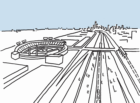
As Chicago weighs a new generation of stadium and mixed-use development proposals, Chicago Architect, the magazine of AIA Chicago, has published “Game Day, Every Day: Rethinking Stadiums as Neighborhood Anchors,” a feature examining how sports venues can become more integrated, year-round pieces of the city.
The article highlights the Chicago Architecture Center’s recent report, “Win/Win: The New Game Plan for Urban Stadiums,” which proposes a new framework for stadium development in Chicago. Rather than treating stadiums as isolated venues, the report calls for a neighborhood-first approach—one that prioritizes transit, walkability, density, public space, connectivity, and long-term development.

SOM Partner Adam Semel, AIA, contributed to the CAC’s working group, joining civic leaders, architects, planners, developers, and policy experts in exploring how future stadium investments can advance broader city-building goals. In the article, Semel underscores the important role architects can play in helping cities and team owners imagine what is possible.
“There’s a rich history of architects being provocateurs and pushing people to see what’s possible when things are seemingly impossible,” Semel said. “The superpower architects bring to these kinds of projects is that we can visualize and show people what it can look like and what it can feel like.”
For Semel, successful stadiums are not standalone destinations. They are platforms for housing, retail, offices, public space, and neighborhood activity that extend well beyond game days. As the article notes, he believes Chicago’s next chapter of stadium development should focus on strengthening the communities around these venues rather than repeating the isolated “stadium island” model of the past.
“If you’re going to spend billions of dollars on a piece of social, cultural, and civic infrastructure like this, you have to get it right,” Semel said. “If a stadium only lasts 20 years, you got it wrong.”