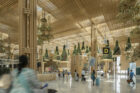
N’djili International Airport Terminal

  • Client INFRAROSE S.A.R.L.U.
  • Expertise Airports, Transportation
  • Location Kinshasa, Congo, the Democratic Republic of the

The new terminal at N'Djili International Airport repositions Kinshasa as a modern, efficient hub for Central Africa—expanding capacity, driving economic growth, and enabling the DRC’s first true international gateway.

Project Facts
  • Status Design In Progress
  • Size Building Gross Area: 50,000 square feet
  • Passengers 5000000
  • Gates 8
  • Collaborators
    NACO (Netherlands Airport Consultants) Luseo Kardoff Ingenieure Lerch Bates Grant Associates Mulvey + Banani BNP Associates Inc. Irrigation Engineers Rowan Williams Davies & Irwin Inc. (RWDI)
Project Facts
  • Status Design In Progress
  • Size Building Gross Area: 50,000 square feet
  • Passengers 5000000
  • Gates 8
  • Collaborators
    NACO (Netherlands Airport Consultants) Luseo Kardoff Ingenieure Lerch Bates Grant Associates Mulvey + Banani BNP Associates Inc. Irrigation Engineers Rowan Williams Davies & Irwin Inc. (RWDI)

A national gateway with a global vision

SOM’s design for the new N’Djili International Airport Terminal redefines the future of air travel in the Democratic Republic of the Congo. As the country’s largest international terminal, the project positions Kinshasa as a major Central African hub—supporting economic growth, national airline expansion, and improved connectivity across regional and global routes. 

The new terminal replaces aging infrastructure with a modern, efficient, and scalable facility, designed to serve 5 million annual passengers by 2050 and up to 9.1 million beyond.

Designed for long-term adaptability, the project is central to the DRC’s broader vision for national development and global economic integration. It also stands as a symbol of the country’s aspirations: a bold convergence of design, culture, and progress that will set a new standard for transportation infrastructure in the region.
© SOM

Architecture rooted in place

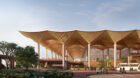
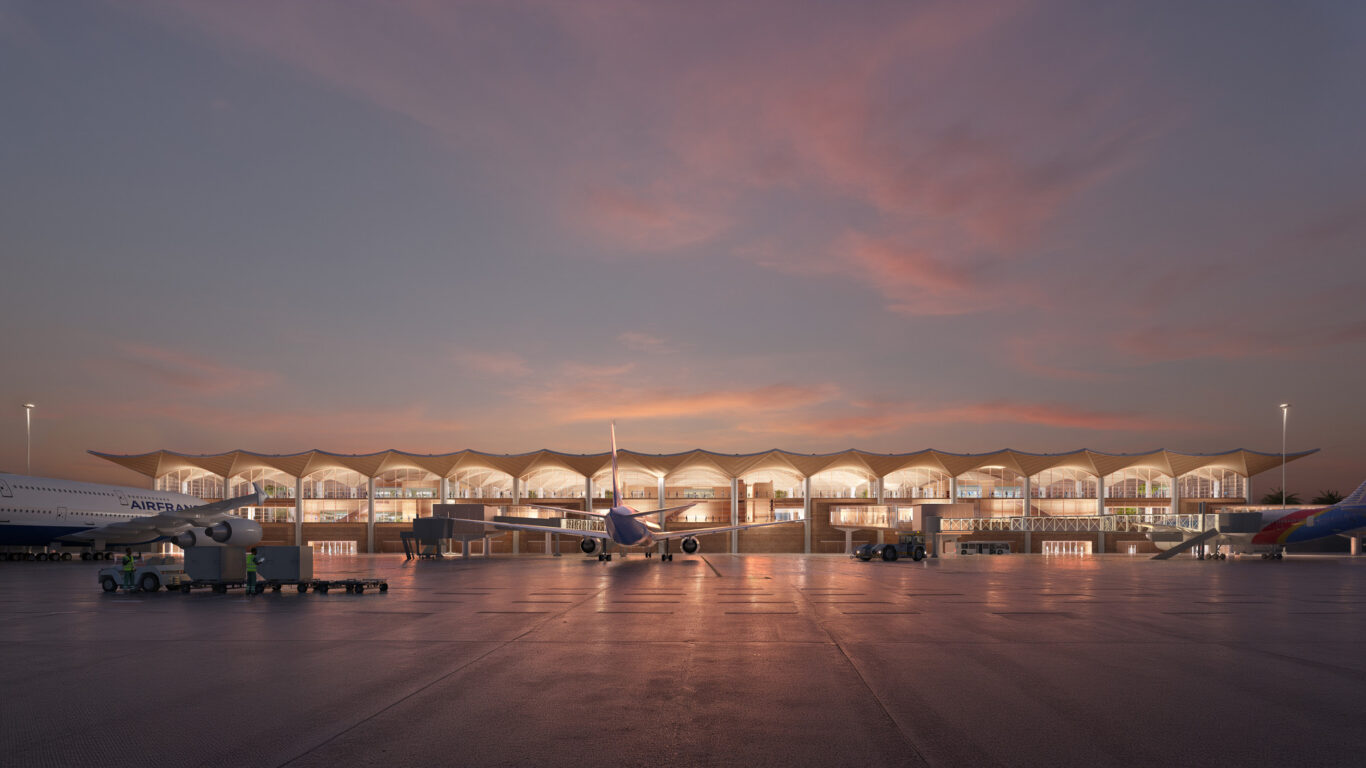
The architecture draws inspiration from the DRC’s natural landscapes and cultural heritage. A warm, mineral-rich palette—reflecting native soils and stone—grounds the terminal in its setting.The terminal’s most iconic feature is its roof, inspired by traditional Congolese basketry.

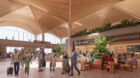
Composed of a modular grid of square hyperbolic paraboloids, the structure forms a dynamic, rippling canopy that filters daylight and intuitively guides passengers through the space. This expressive structure balances visual elegance with technical performance—minimizing material use, enables straightforward construction, and supports future expansion.

© SOM

Travel elevated by design and identity

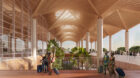
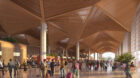
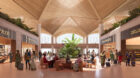
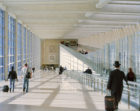
The terminal is designed to elevate the traveler’s journey through intuitive wayfinding, natural light, and thoughtful amenities. Double-height interior gardens, lounge-inspired seating, and curated cultural elements will create a calm, welcoming atmosphere.

Retail, dining, and beverage offerings are organized into two zones—one for international and one for domestic passengers—each anchored by central seating hubs. Durable, low-maintenance materials such as natural stone and terrazzo will ensure long-term performance while echoing the nature-inspired forms. Every detail—seating, lighting, and finishes—is designed for both function and comfort. 

© SOM

Our plans for N’Djili International Airport go far beyond infrastructure—they’re a bold expression of the DRC’s national aspirations. Rooted in the country’s landscape and cultural heritage, the terminal design blends high-performance architecture with textures and patterns drawn from Congolese landscapes and traditions to create an international gateway that is both inspiring and efficient.


A landmark for sustainable development

From energy efficiency to social impact, the terminal is designed to set a new benchmark for sustainable infrastructure in Central Africa. Targeting LEED Gold certification, the design incorporates locally sourced materials, low embodied-carbon systems, and climate-responsive strategies for long-term resilience.

Our team developed a tailored sustainability framework that goes beyond environmental performance to embed social equity, economic resilience, and long-term adaptability. The project aligns with the DRC’s national sustainability priorities and the United Nations Sustainable Development Goals, particularly those focused on clean energy, infrastructure, sustainable cities, and climate action.

More Projects

01/