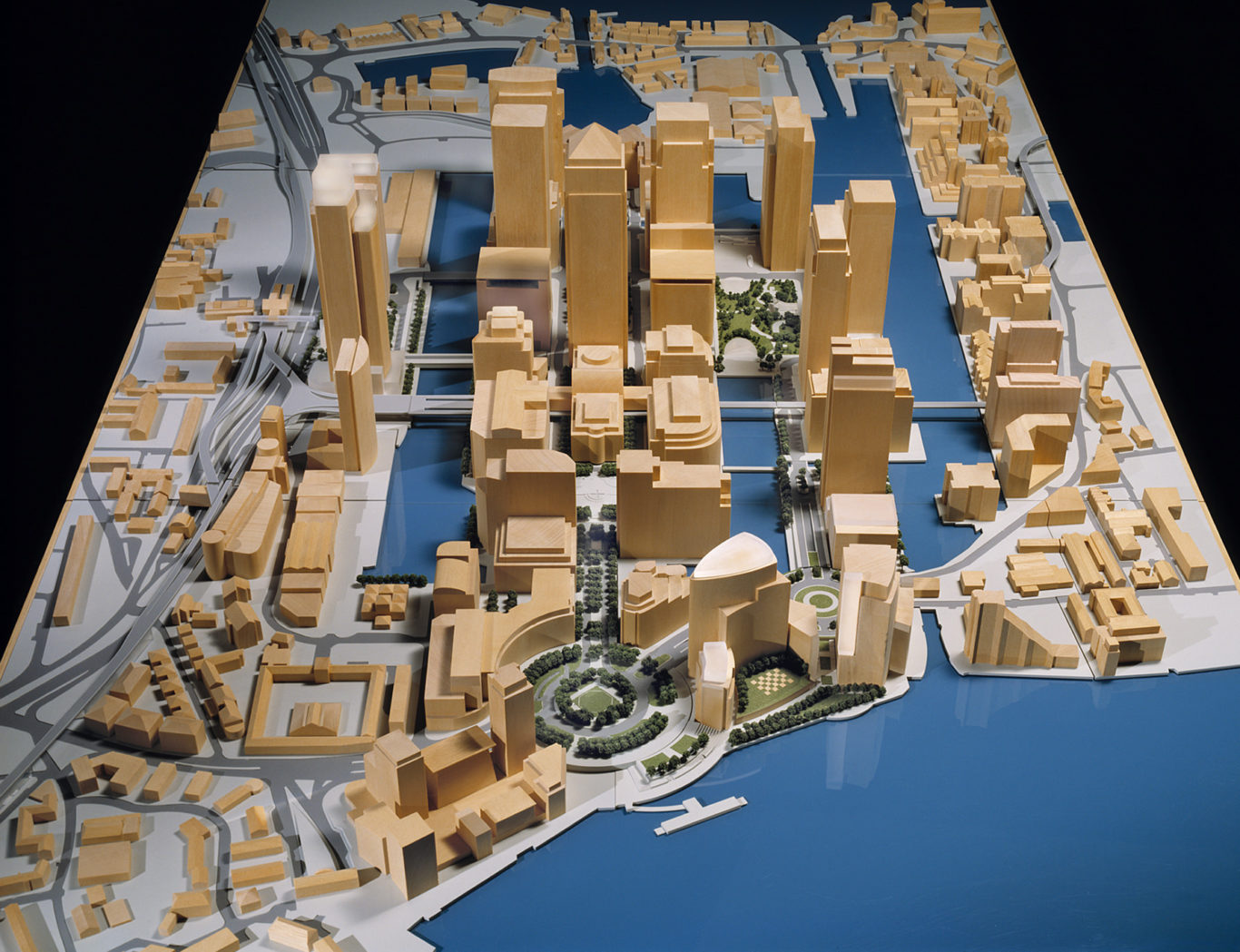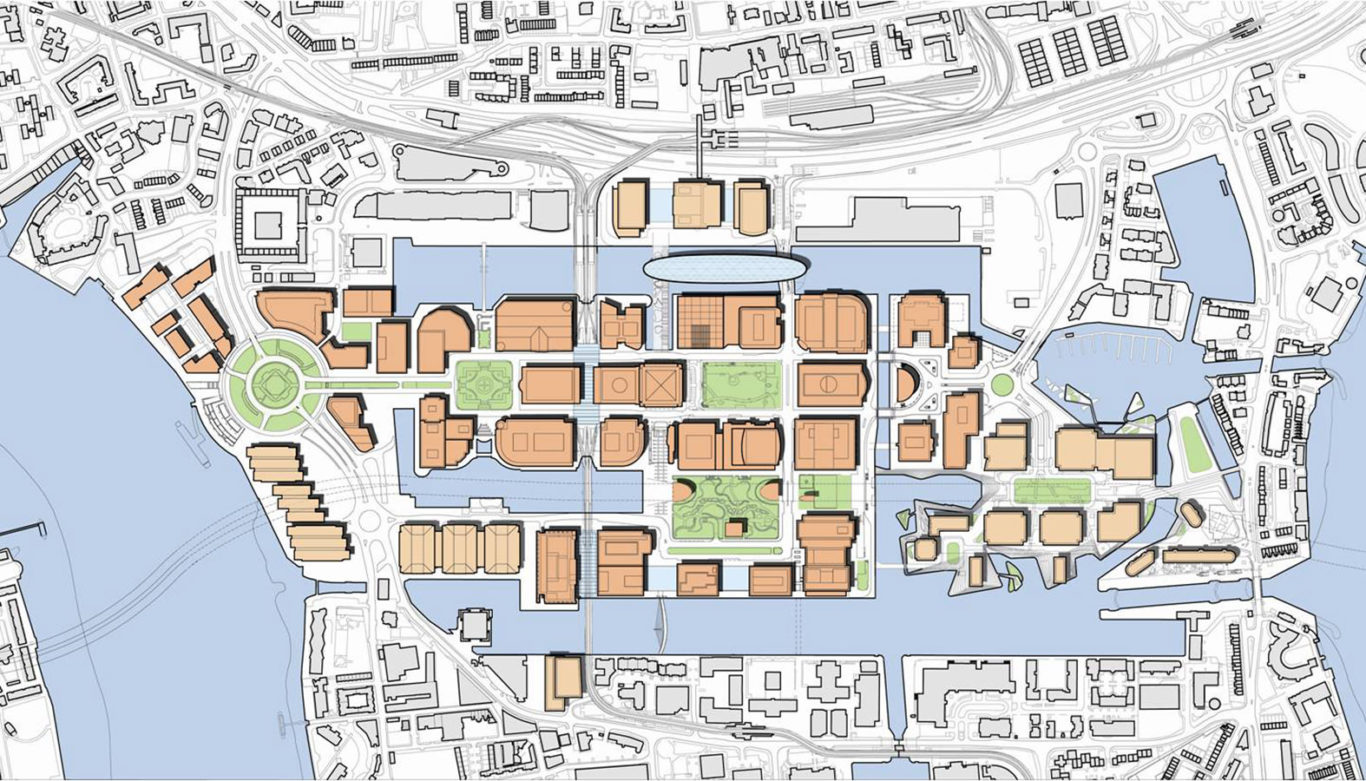
For 25 years, SOM has collaborated with multiple designers and client groups in the planning and building of Canary Wharf. Designed to accommodate a flourishing financial sector and breathe new life into London’s former Docklands, SOM’s master plan established a roadmap for one of the largest urban revitalization projects in the modern era.
The plan identified 20-plus building sites spread across several districts and created a robust public transportation network and vibrant public realm. SOM designed several key buildings and collaborated with artists to create unique public plazas, gardens and bespoke street furniture throughout the area. The project has been hugely successful. Canary Wharf is now a thriving employment and retail hub for East London and a catalyst for its broader regeneration. As it continues to expand, SOM has played a key role in guiding its growth.